Roman Shipwreck with Amphorae Confirmed Near Punta Chiappa by Italian Archaeologists

Discovery of a Roman Shipwreck Off the Ligurian Coast
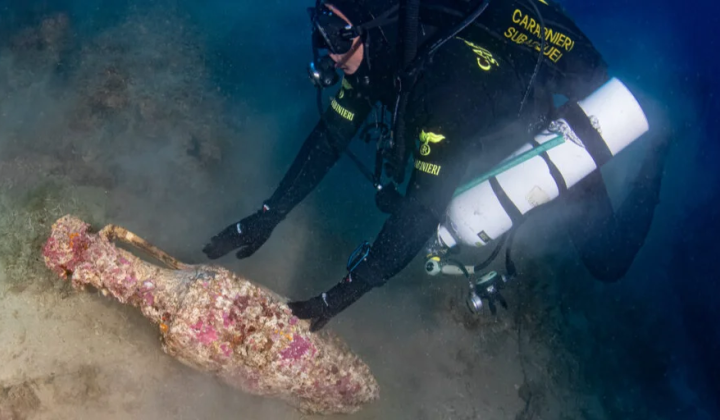
According to НВ — Техно: Divers specializing in underwater archaeology from Italy have pinpointed the location of a Roman-era vessel near Punta Chiappa in Liguria. At depths exceeding 40 meters, the team uncovered nine Dressel 1 wine amphorae, dating back to the late 2nd to early 1st century BCE. This breakthrough came after the Genoa-based Carabinieri's underwater unit stumbled upon the amphorae during training exercises near Camogli, inside the marine protected area of Portofino.
Tracing the History of the Find
The earliest notable recovery dates to November 7, 1959, when diver Duilio Marcant retrieved two intact amphorae. However, a follow-up expedition in May 1960 was unable to locate the amphorae beneath the silt, instead finding a single amphora with a rope attached, suggesting attempts at unauthorized salvage. Archaeologist Nino Lamboglia speculated that some artifacts might have been illicitly removed over time.
Centuries of coral growth and sediment accumulation have caused the amphorae to become firmly embedded on the seabed, complicating their detection. Two amphorae were carefully raised to prevent damage or theft, though the ship's remains remain undiscovered to date.
Future surveys aim to map the full extent of the wreck site and recover additional relics hidden among rocks and seabed deposits. As Simon Luca Trigona noted,
“This is the very zone described over 67 years ago.”
Management of the site will fall under the S.T.A.S. authority, which will regulate diving activities, while the Carabinieri will oversee protection against illicit recovery efforts. Vincenzo Tine emphasized that
“this find highlights the potential of underwater archaeology even in coastal areas long considered thoroughly explored.”
The identification of this Roman ship and its cargo off Liguria not only underscores the importance of underwater archaeology for uncovering historical narratives but also opens new avenues for studying maritime heritage. This decades-long investigation showcases how modern technology and methodologies can reveal artifacts previously overlooked. Ongoing expeditions promise to deepen our understanding of ancient Roman trade and seafaring, contributing significantly to cultural heritage preservation.
This recent discovery of a Roman shipwreck echoes similar findings in other regions, such as the unearthing of an Iron Age wall beneath a Roman settlement on Ons Island, Spain. Such archaeological endeavors highlight the ongoing potential for uncovering ancient histories in areas previously thought to be fully explored, showcasing the rich tapestry of human activity across different eras.

Read also