China’s Vision for a Nuclear-Powered Tank Equipped with an Electromagnetic Railgun by 2045

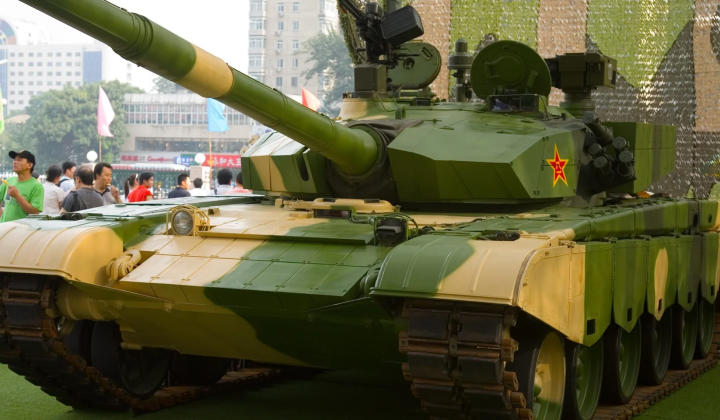
Futuristic Tank Concept
According to НВ — Техно: Chinese engineers are designing a next-generation tank that combines a compact nuclear reactor with a powerful electromagnetic railgun. The ambitious program is divided into three development phases, aiming for completion by 2045. The envisioned vehicle is expected to weigh around 60 tons and will be powered by a small modular nuclear reactor generating 10 megawatts. Its railgun will deliver shots with an energy output of 50 megajoules, capable of propelling projectiles at speeds near 3.5 kilometers per second, potentially reaching distances up to 450 kilometers.
Development Milestones
- The initial phase, targeting 2035, focuses on:
- building a 60-ton tank armed with a railgun capable of firing up to 150 kilometers;
- achieving a shot energy of 10 megajoules;
- utilizing a 1500-horsepower diesel generator;
- incorporating a hybrid energy storage system.
- The second phase aims to:
- extend railgun range to 300 kilometers;
- increase shot energy to 20 megajoules;
- upgrade the diesel engine to 2000 horsepower;
- integrate solid-state batteries and superconducting energy storage;
- manage power supply through an intelligent microgrid system.
- Post-2045, the third phase envisions:
- a fully nuclear-powered tank featuring a 50-megajoule railgun;
- a nuclear reactor with a volume not exceeding two cubic meters;
- radiation shielding weighing no more than three tons;
- nuclear fuel replacement intervals lasting at least five years.
Despite these plans, a military technology specialist has expressed skepticism about installing a nuclear reactor in a combat tank, citing challenges with shielding and heat dissipation. Currently, the concept of a nuclear-powered tank remains a long-term research topic rather than an imminent reality.
In related advancements, France recently showcased the Leclerc tank’s capability to neutralize FPV drones using 120mm canister rounds during live-fire exercises in Abu Dhabi. This highlights how modern armored vehicles are adapting to emerging threats revealed by the Russia-Ukraine conflict, which exposed vulnerabilities of traditional tanks to inexpensive aerial attacks.
The development of a nuclear reactor-driven tank with an electromagnetic railgun reflects a broader global trend in military innovation aimed at boosting combat capabilities and responding to evolving battlefield challenges. As international conflicts continue to evolve, these technological breakthroughs could dramatically reshape armored warfare and stimulate competition among global defense industries.
In the context of military innovation, the development of advanced weaponry is crucial. For instance, the recent unveiling of the Gladius 2 strike drone by Poland's WB Group highlights the growing trend towards integrating cutting-edge technology in defense systems. As nations invest in next-generation military capabilities, such advancements may influence the trajectory of projects like China's nuclear-powered tank.

Read also