China's Emergence as a Middle Eastern Security Guarantor Reshapes Global Power Dynamics

US-China Rivalry in the Gulf
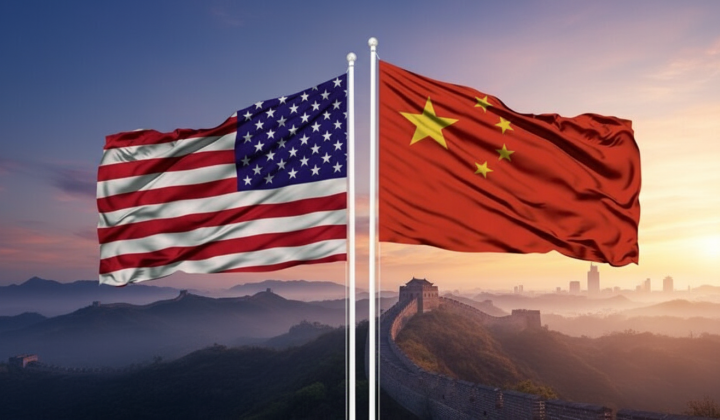
According to ХВИЛЯ: Polish analyst Piotr Kulpa, speaking on political scientist Yuriy Romanenko's broadcast, outlined the geopolitical competition between the United States and China in the Persian Gulf and the wider Middle East. He emphasized that China's economy is critically dependent on energy resources from the region, making this rivalry particularly significant. Kulpa noted that for decades, Arab monarchies have relied on the US security umbrella, but shifts in international politics are now calling that long-standing dependence into question.
China's Strategic Imperatives and a Shifting Landscape
Kulpa argued that China has no interest in allowing the United States to gain full control over the Gulf, as this would eliminate its strategic alternatives.
“China is absolutely not interested in complete control of the Gulf shifting to the United States' side,” the analyst stated.
Given its energy dependence, Kulpa suggested China may come to view a militarily powerful Iran as the ultimate guarantor of its oil and gas supplies. This perspective highlights how energy security is a primary driver of Beijing's foreign policy in this volatile region.
Kulpa posited that the situation could lead to a perception that the US is an ineffective security partner for Arab nations.
“And what then? Then there will be an agreement to start negotiations about removing the bases that are supposed to protect them and which have proven ineffective,” he added.
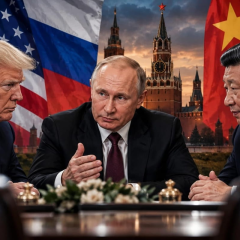
Such a development, he warned, might result in the world dividing into two blocs: one comprising Russia and China, and the other led by the United States. Kulpa described this as “the world splitting into two parts. Russia with China. China will tie itself to Russia, and Russia will cling to China on one side and to the United States on the other.”
Consequently, geopolitical shifts in the Middle East could profoundly alter the global balance of power. This raises new questions about the future energy security of Arab states and their relationships with both Washington and Beijing. Observing developments in this arena is crucial, as changes in foreign policy may forge new strategic alliances and competitive relationships that will define the global security architecture for years to come.
The shifting dynamics in the Middle East are not only affecting China's role as a security guarantor but also raising concerns among Arab allies regarding their longstanding relationship with the US. As highlighted by analysts, this growing uncertainty may lead these nations to reconsider their alliances, potentially aligning more closely with China. For a deeper understanding of these geopolitical shifts and their implications, read more about how Arab allies might pivot towards China.

Read also