China Deploys Humanoid Robots to Sort Parcels in Postal Centers

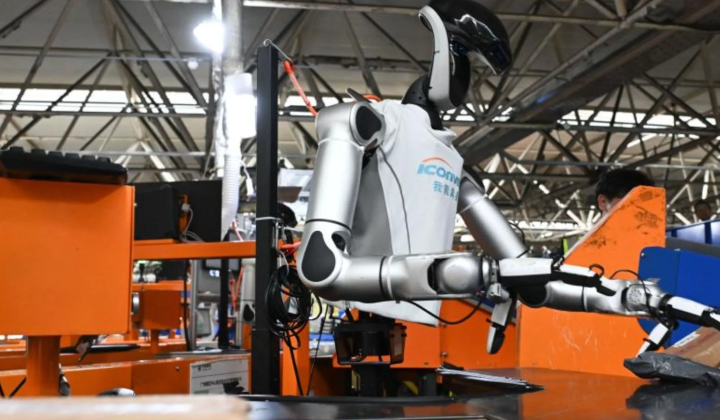
Humanoid Robots Enter China's Logistics Sector
According to НВ — Техно: China has begun integrating humanoid robots into the Jiangao logistics hub, part of the Guangzhou postal center, as part of a broader push to automate its mail industry. Each robot can process up to 1,200 parcels per hour, significantly boosting operational output. Guangzhou handles roughly 6.5 million postal items daily, a figure that can exceed 10 million during peak periods. This initiative is led by China Post Group, which is actively adopting cutting-edge technologies to modernize logistics.
The humanoid robots are designed to carry out a range of tasks, including:
- sorting packages;
- navigating warehouse floors;
- identifying shipments;
- interacting with shelving systems;
- retrieving parcels from containers and placing them onto sorting lines.
Footage of these operations has been released by Xinhua.
In addition to humanoid robots, the facility also relies on autonomous forklifts to transport goods throughout the warehouse. China has emerged as a leading market for humanoid robotics, with domestic companies developing systems for manufacturing, logistics, elderly care, and public services. Logistics is considered one of the most promising areas for such technology, given the around-the-clock demands of warehouses and postal centers.
Despite these advances, questions remain about the long-term reliability of these systems, maintenance costs, and whether they offer a clear advantage over simpler automation solutions. Still, the deployment of humanoid robots in logistics underscores China’s commitment to innovation and automation in this critical industry.
Future of Automation in Logistics
The use of humanoid robots in logistics has the potential to transform supply chain management and parcel handling. Automation can lower labor costs while improving the speed and accuracy of processing shipments. These improvements align with rising consumer expectations for faster delivery and better service quality in the global economy. For other nations seeking to upgrade their logistics networks, adopting such technologies could represent a significant step forward.
As China continues to innovate within the logistics sector, it's also exploring the potential of humanoid robots in other fields. For instance, the recent introduction of a humanoid service robot designed for the hospitality industry highlights the versatility and adaptability of robotic technology. These advancements not only enhance service efficiency but also reflect a broader trend towards automation across various sectors. To learn more about how these robots are changing public interaction, visit the latest developments in service robotics.

Read also