From Plastic Waste to Jet Fuel: Niutech's New Chinese Refinery Project Targets SAF

According to НВ — Техно: Publication date: August 31, 13:03
Sustainable aviation fuel is increasingly seen as a key tool for lowering emissions from air travel, while plastic waste remains a growing environmental challenge.
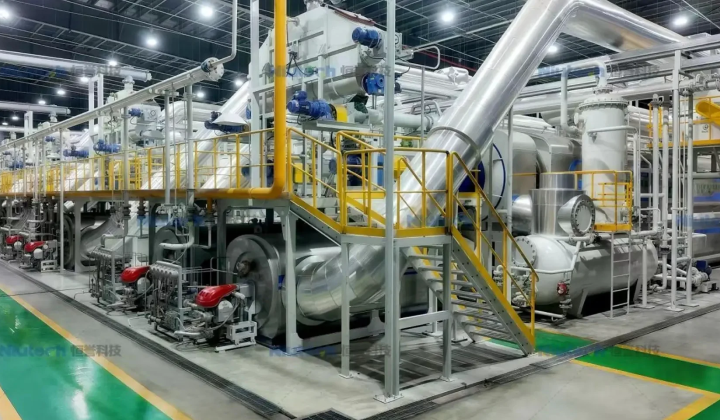
Niutech, a Chinese company, has signed an agreement with a major energy group to set up an industrial line that turns plastic waste into feedstock for sustainable aviation fuel (SAF). The project entails upgrading an existing oil refinery and integrating plastics recycling into the production of jet fuel. Each unit will have a capacity of 10,000 to 50,000 tonnes of plastic waste per year.
Inside the Continuous Pyrolysis Process
The system is based on continuous pyrolysis, in which plastic is heated without oxygen and breaks down into hydrocarbon products, including pyrolysis oil. After further processing and hydrotreating, that oil can be used to make SAF. The technology can handle a broad spectrum of plastics:
- polypropylene
- polyethylene
- polystyrene
- ABS plastic
- nylon
These materials can be processed individually or in mixed streams. According to Niutech, the method does not require complex washing, sorting, or drying of plastic waste.
Niutech has already installed continuous pyrolysis systems in the UK, South Korea, Denmark, Thailand, Vietnam, and China. Several delivered units operate at an annual capacity of roughly 10,000 tonnes. The new project is meant to test the reliability of the technology at a large oil-refining facility.
For context, the European Union's ReFuelEU Aviation rules require SAF to make up 2% of fuel at EU airports in 2025, 6% in 2030, and 70% by 2050. SAF production today relies on used cooking oil and other waste streams. Expanding pyrolysis could play a major role in reaching those targets, while reducing plastic pollution and supporting the shift to greener aviation fuel.
Deploying pyrolysis at Chinese refineries could mark an important step in tackling plastic waste and advancing global sustainability goals.
As demand for sustainable aviation fuel grows, innovations like this one can help shrink aviation's environmental footprint and lessen dependence on traditional fossil fuels. They also highlight the importance of collaboration between private technology companies and large energy groups in bringing new industrial processes to scale.
As the aviation industry seeks innovative solutions to meet sustainability targets, the conversion of waste materials into valuable resources is gaining attention. In a similar vein, a recent initiative in China focuses on transforming coal into graphene through chemical processes, eliminating the need for burning. This approach not only addresses energy challenges but also highlights the potential of advanced recycling technologies. For more insights on this groundbreaking method, explore how coal can be repurposed into high-value materials.

Read also