Chinese Scientists Break Data Transmission Record with 3.2 Petabits per Second Over Optical Fiber

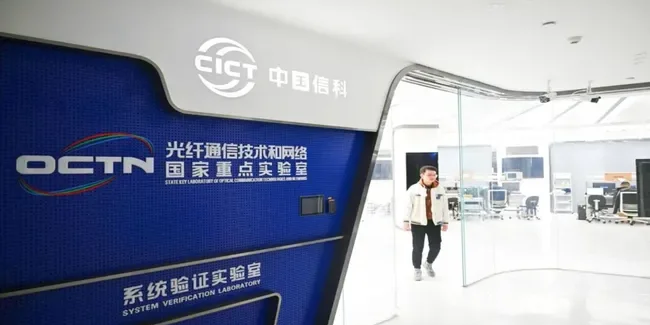
China Sets New Benchmark for Ultra-High-Speed Data Transmission
According to НВ — Техно: A team of Chinese researchers has achieved a groundbreaking data transfer rate of 3.2 petabits per second in real-time using a 24-core optical fiber. This surpasses the previous record of 2.5 petabits per second established earlier this year, showcasing the rapid advancements in optical communication technology. To put this into perspective, the volume of data transmitted in one second could stream over 20,000 4K movies simultaneously.
Collaborative Efforts and Advanced Techniques
This milestone was accomplished through a collaborative project involving several major Chinese scientific and technological organizations, including:
- The National Key Laboratory of Optical Communication Technologies
- China Information and Communication Technologies Group
- Pengcheng Laboratory
- Fiberhome Fujikura Fiber Optic Technology Company
The breakthrough relied on spatial multiplexing combined with multi-band S+C+L transmission. Spatial multiplexing enables multiple independent data streams to travel through separate channels within a single optical fiber, while the S, C, and L bands utilize different wavelengths to broaden the overall spectrum for data transfer.
The hardware architecture used in the experiment met commercial standards and operated continuously in real-time. The achieved bandwidth could support internet speeds of 1 Gbps for approximately 3.2 million households simultaneously. Although a higher speed of 5.29 petabits per second was recorded under controlled laboratory conditions with similar multi-core fiber, such results have yet to be translated into practical, everyday network deployments.
While the Chinese consortium has announced the commercial compatibility of their equipment, the timeline for market availability, pricing, and independent assessments of long-term performance remain undisclosed.
Meanwhile, Meta has announced its plans to launch the Petal submarine cable by 2029, which will deliver 1 petabit per second capacity connecting France and the United States. Spanning over 4,300 miles across the Atlantic Ocean floor, the Petal cable features two independent fiber cores within a single glass strand to double bandwidth. Its system includes 24 pairs of dual-core fibers-equivalent to 48 traditional single-core fiber pairs-and doubles the capacity of its predecessor, the Anjana cable.
This advancement in optical communications could significantly influence the evolution of global network infrastructure. - Source Unknown
As global demand for faster and higher-volume data transmission intensifies, innovations like these are critical for enhancing internet quality and coping with growing network congestion. The competition between companies such as Meta and Chinese research teams highlights the vital role of technological innovation in shaping the future of reliable, high-speed communications worldwide.
As advancements in data transmission continue to accelerate, the recent achievements in optical fiber technology by Chinese researchers highlight the growing competition in this field. Notably, Meta's plans for a subsea cable aiming to deliver 1 petabit per second by 2029 further illustrate the global push towards ultra-high-speed connectivity. This ongoing race not only promises enhanced internet services but also signifies a pivotal shift in how data is transmitted across the globe.

Read also