Ex-CIA Director Burns: Putin Misjudged Ukraine, While the U.S. Underestimated Its Will

The Geopolitical Landscape in a New Era
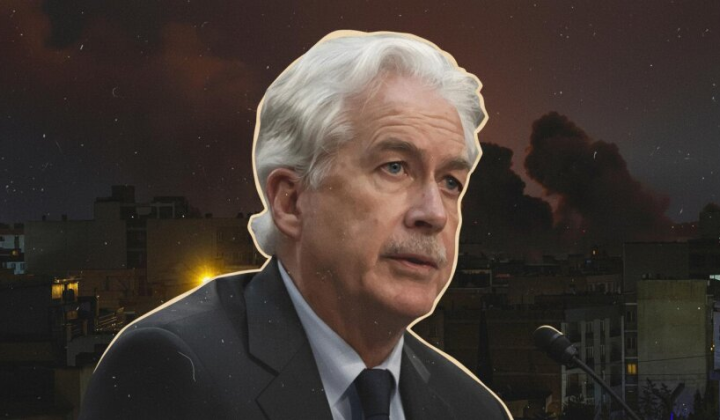
According to ХВИЛЯ: In an interview on April 1, former CIA Director William Burns, a seasoned diplomat who served as U.S. Ambassador to Russia and Deputy Secretary of State, examined the global situation following the post-Cold War period. He provided his analysis on several critical issues, including:
- The U.S. conflict with Iran
- Russia's war in Ukraine
- U.S.-China strategic rivalry
- The state of American institutions and the intelligence community
Potential Outcomes of the Iran Conflict
Burns outlined three potential scenarios for the conflict with Iran: complex negotiations, military escalation, or a declaration of victory that shifts the burden to allies. He warned that Russia and China could emerge as beneficiaries of this war, gaining from higher energy prices and the distraction of U.S. focus away from the Indo-Pacific region. Burns also highlighted underreported but vital topics such as the situation in Africa, terrorism, cybersecurity, and the Gaza and West Bank crises.
Discussing Russia's war in Ukraine, Burns revealed that the CIA released three recruitment videos on Telegram targeting Russians, which he assessed as highly effective. He estimates that Russia has suffered over one million casualties, including killed and wounded, in Ukraine. Burns stated that Putin's decision to launch the war was based on a fundamental miscalculation, rooted in a failure to recognize Ukraine as a genuine nation with a strong national identity. This analysis comes from a top official with decades of experience in Russian affairs.
William Burns expressed significant concern over the state of American institutions. He noted that 25% of the U.S. State Department's career staff had been dismissed or pushed out, a situation he described as a severe problem for the country.
"We are now inflicting damage on ourselves for a generation to come," Burns stated.
He emphasized the critical importance of preserving institutional traditions and a professional civil service.
According to Burns, the two defining features of the new geopolitical era are the return of great power competition with nations like China and Russia, and a revolution in technology. He cautioned that the danger lies in the erosion of institutions and an over-reliance on hard power, which could lead to what he termed a 'slow-motion suicide of a great power.'
During the interview, Burns used vivid language to illustrate his points:
"Unfortunately, in all my years working on the Middle East, I've learned: it's a place where grand ambitions and ill-conceived strategies go to die," he remarked,
underscoring the persistent complexities of the region.
Overall, William Burns's interview offers a profound analysis of contemporary geopolitical challenges and the risks facing the United States. It stresses the indispensable role of strong institutions in maintaining international stability. In an age of intensifying great power rivalry, the effectiveness of American institutions is paramount for sustaining U.S. global influence. His assessment further underscores the necessity of vigilant attention to emerging threats across diverse regions, from Africa to the Middle East.
In light of Burns' insights on the geopolitical challenges facing the U.S., it is crucial to also consider how strategic missteps have influenced other regions, particularly in the context of Iran. The former MI6 chief recently discussed the implications of U.S. actions that have allowed Iran to gain a strategic foothold. Understanding these dynamics is essential for comprehending the broader implications of the current global landscape. For more on this topic, see how the U.S. has inadvertently shifted strategic advantages to Iran here.

Read also