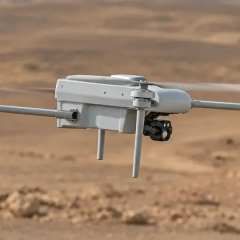
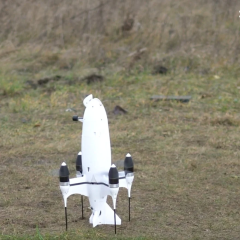
Quantum Systems Breaks Speed Barrier for Battery-Powered Drones at 727 km/h

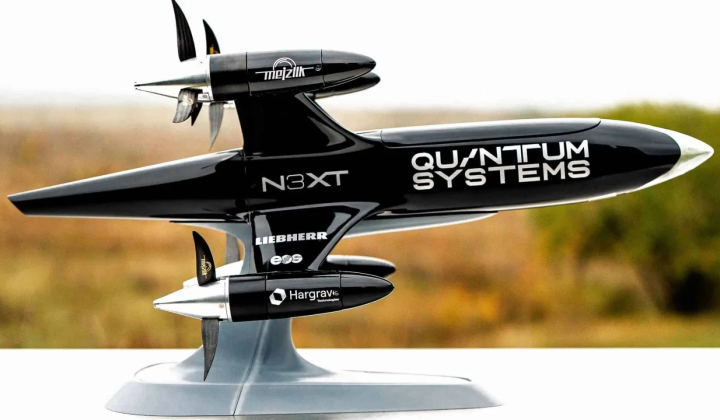
Apex Recordhunter Sets New Global Speed Benchmark for Drones
According to НВ — Техно: Quantum Systems has shattered the world speed record for battery-powered electric drones with its Apex Recordhunter, reaching an astonishing 727 km/h at a military test site in Germany. This record-breaking flight took place on November 27, 2026, with an officially verified two-way speed of 727 km/h over a 100-meter course. Independent experts confirmed the achievement using GPS data and onboard black box recordings. The Apex Recordhunter acts as a cutting-edge prototype for high-speed drone interception technology.
Earlier in October 2026, during the Forward Edge 26 military exercises, the Apex Recordhunter achieved a one-way speed of 777 km/h. Insights gained from this technology are now being applied to develop the Skyron counter-drone system designed to combat hostile UAVs.
“Breaking records isn’t our end goal. Our focus is on advancing rapid-response systems capable of addressing emerging threats.” - Florian Seibel, Quantum Systems spokesperson
Seibel also highlighted the growing need for scalable interception solutions against Russian jet-powered drones such as the Geran-4 and Geran-5, emphasizing that Apex Recordhunter expands the boundaries of current drone technology.
Quantum Systems collaborates with several specialized technology partners, including:
- EOS, which provided additively manufactured components;
- Liebherr, responsible for designing and producing the high-performance battery;
- Mejzlik, creator of the drone’s propellers;
- Hargrave Technologies, developer of the electronic speed controllers.
“I’m incredibly proud of the achievements made by our engineers, operators, and manufacturing teams,” Seibel remarked in praise of their collective effort.
Advancements Shaping the Future of Drone Technology
The Apex Recordhunter’s record has been officially entered into the Drone World Records. Within the broader context of UAV innovation, it’s worth noting that in fall 2026, a student-built jet drone named Reaper reached 790 km/h while carrying a 1.2 kg payload. This drone was developed by Thomas Salvo, an aerospace engineering student at the Georgia Institute of Technology. These breakthroughs highlight ongoing advancements that are expanding opportunities for drone interception and security technologies.
Setting such speed records for drones has a profound impact on military capabilities and security measures. Developing UAVs capable of extreme speeds enhances the effectiveness of air defense systems and may redefine strategies for countering new aerial threats, particularly in modern conflict zones. Beyond military applications, these innovations also drive progress in commercial drone technologies, benefiting sectors ranging from cargo delivery to scientific research.
As the race for drone speed intensifies, the recent achievement by Georgia Tech students with their jet-powered Reaper drone, which reached an impressive speed of 790 km/h, highlights the rapid advancements in this field. Such developments not only push the boundaries of technology but also set new standards for future innovations in drone capabilities. To learn more about this groundbreaking record, check out the details in our article on the record-breaking Reaper drone.

Read also