James Webb Space Telescope Detects Thick Atmosphere on Rocky Exoplanet TOI-561 b, 280 Light-Years Away

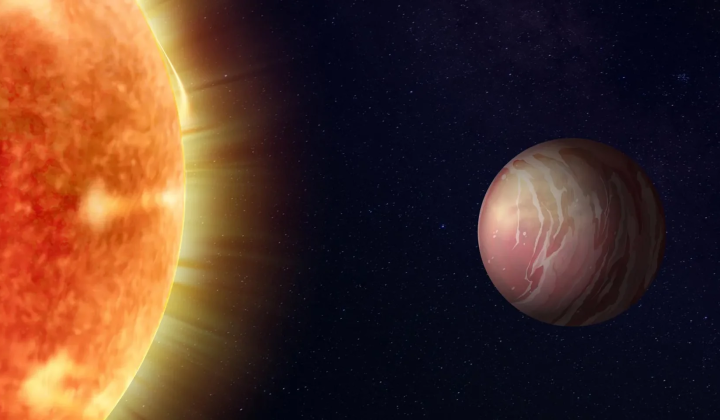
Discovery of a Dense Atmosphere Surrounding Exoplanet TOI-561 b
According to НВ — Техно: The James Webb Space Telescope has identified evidence of a substantial atmosphere enveloping the rocky exoplanet TOI-561 b, situated approximately 280 light-years from Earth. An international team of astronomers, including researchers from the University of Birmingham and the University of Waterloo, conducted the study which revealed that the planet reflects nearly 75% of the light from its host star. This high reflectivity suggests the presence of mineral-based clouds that likely shield the planet’s surface from intense heating.
Observations of TOI-561 b spanned 37 hours, covering almost four complete orbits around its star. Findings indicate that the atmosphere is capable of redistributing heat between the planet’s day and night sides, resulting in cooler daytime temperatures than expected. However, the existence of such an atmosphere is puzzling given the star’s intense radiation, which theoretical models predict should have stripped away the planet’s gaseous envelope billions of years ago.
Possible Processes Maintaining the Atmosphere
One theory proposes that continuous replenishment of atmospheric gases from the planet’s interior, potentially linked to a global ocean of molten rock, helps sustain the atmosphere. Data suggests that the atmosphere may contain clouds composed of silicate minerals, including:
- silicon dioxide
- magnesium silicate
- carbon dioxide
- sulfur dioxide
Further observations using the James Webb Telescope are planned to better understand the atmospheric composition.
"This challenges our current understanding. We expected a rocky planet so close to its star, exposed to intense radiation, to have lost its atmosphere long ago."
Anjali Piette, Researcher
This breakthrough underscores the critical role of advanced astronomical instruments in exploring exoplanets and their atmospheres. Detecting a thick atmosphere on TOI-561 b opens new avenues for studying rocky worlds, especially regarding their potential habitability. It also calls into question existing models of atmospheric evolution under extreme stellar radiation. Continued research will be essential to uncover how atmospheres survive and change in such harsh environments.
The discovery of TOI-561 b's unique atmosphere raises intriguing questions about atmospheric dynamics on exoplanets. Similar to how recent studies have shown turbulent winds are affecting WASP-17b's atmosphere, the mechanisms maintaining the atmosphere of TOI-561 b could reveal essential insights into the complexities of planetary atmospheres in high-radiation environments.

Read also