Analyst Explains Why Iran's Kurds Did Not Heed a US Call to Arms

Iran's Kurdish Population: A Century of Unfulfilled Promises and Modern Progress
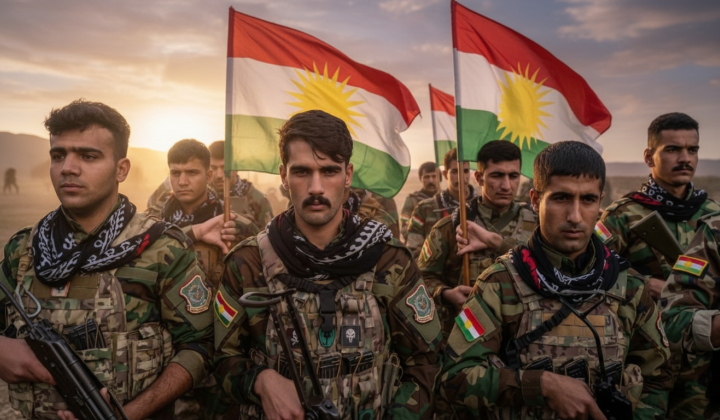
According to ХВИЛЯ: Analyst Tigran Avakyan, speaking on political commentator Yuriy Romanenko's broadcast, argued that Iran's Kurdish population did not launch an armed uprising in response to signals from Washington. He cited several reasons for this, including the military weakness of Kurdish groups and a deep-seated historical disillusionment stemming from over a century of unfulfilled Western promises of independence. The Kurdish people are a significant ethnic minority spread across Iran, Iraq, Turkey, and Syria, with a long history of seeking greater autonomy.
Avakyan noted that for the last hundred years, Kurds have been promised independence, yet these pledges have never been honored.
"For the last 100 years, the Kurds have been promised independence, but no one has delivered,"
he emphasized, likening the situation to empty promises of marriage. He further clarified that these assurances sometimes span an even longer period, stating, "A bit more, 105 years, 120 years they have been promised independence."
The Contemporary Advancement of the Kurdish People
Despite these challenges, Avakyan highlighted that Kurds continue to advance. He pointed to their achievements, noting that Kurds are obtaining higher education, becoming members of parliament in Sweden, and developing as a community in Germany.
"Kurds are also studying now, getting higher education, becoming parliamentarians in Sweden, this nation is developing in Germany, an elite is gradually forming,"
the analyst remarked. This demonstrates that the Kurdish population is not merely waiting for change but is actively working to improve its standing on the global stage.
The situation of Kurds in Iran and other host countries underscores the complex ethnic and political dynamics of the Middle East. A century of broken promises regarding independence has fostered profound disappointment, yet their socio-economic progress reveals a persistent drive for self-determination and active participation in international life. This context is crucial for understanding regional political and social processes, as well as potential future developments.
In light of the ongoing complexities surrounding Iran's ethnic groups, it's essential to examine how Kurdish aspirations intersect with other regional dynamics. For instance, the tensions between Kurdish and Baloch separatism, contrasted with Azerbaijani integration efforts, reveal a multifaceted picture of Iran's internal divisions. To explore this intricate relationship further, read about the challenges posed by separatist movements within Iran's diverse society here.

Read also