Why Turkey Will Stay Out of the Iran-Kurdish Conflict

Former Ukrainian Ambassador Voices Concerns Over Western Strategy
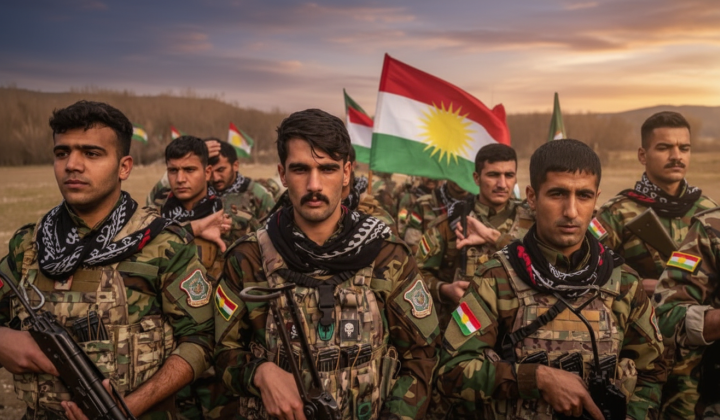
According to ХВИЛЯ: In an interview with political analyst Yuriy Romanenko, former Ukrainian ambassador to Turkey, Serhiy Korsunsky, expressed apprehension about the Western coalition's strategy of seeking to topple Iran's regime by supporting Kurdish groups. He warned this approach could create significant risks for Turkey. Korsunsky cited historical facts to illustrate the Kurds' prolonged struggle for autonomy, noting they have waged an armed conflict against Turkey for over 40 years. The Kurdish question remains a central and sensitive issue in Turkish domestic and foreign policy.
PKK Ceasefire and Turkey's Calculated Response
Korsunsky pointed out that the Kurdistan Workers' Party (PKK) recently laid down its arms and ceased hostilities against Turkey, a move widely seen as a major victory for President Recep Tayyip Erdoğan.
"I don't think there will be another attempt [at creating Kurdistan] because, just before all these events, the Kurdistan Workers' Party disarmed and is stopping its struggle against Turkey," said Korsunsky.
He added that while Kurds in Iran are receiving weapons, this is unlikely to spill over into Turkey, though Ankara will view the developments with unease.
"These Kurds have a rather combative character and experience, and if these Peshmerga, these Kurdish armed formations, take up the cause, they could certainly pose serious competition to the Islamic Revolutionary Guard Corps," Korsunsky emphasized.
Korsunsky also referenced the involvement of Yevgeny Primakov, who 'personally participated in supporting Kurdish formations on the border with Iraq.' He noted that Russia has long been involved in backing Kurds in their struggle against Turkey.
"Comrade Primakov personally took part in encouraging Kurdish militant formations in the mountains on the border with Iraq and giving them weapons," he added.
Korsunsky concluded that while Turkey will react nervously to the situation, it does not seek to become involved in the unfolding conflict.
"That Turkey will react nervously to this is beyond doubt, but I think in this situation Turkey will not seek to participate," he summarized.
Serhiy Korsunsky's remarks highlight the complex, multi-faceted context in which the interests of Turkey, Kurdish groups, and international actors intersect. Western and other foreign support for the Kurds could have far-reaching consequences for regional security, given the historical tensions between Turkey and Kurdish communities. Future developments may impact stability in the region and relations between Turkey and its neighbors, particularly Iran and Russia.

Read also