Company Leaders Now Have Essential Metrics for Measuring Workplace Culture

The Importance of Organizational Culture
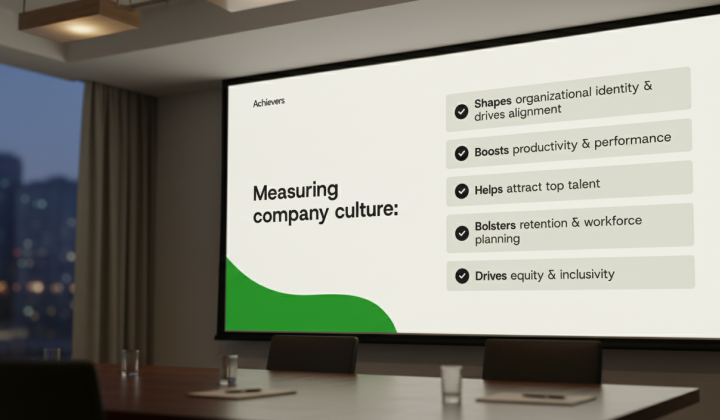
According to Achievers: Organizational culture is a critical driver of business success, consisting of shared values, behaviors, and expectations. For company leaders, measuring and shaping this culture is essential to identify key metrics, evaluation methods, and its impact on productivity, employee retention, and talent acquisition.
A cultural metric is a quantifiable indicator of a company's health, engagement, and alignment. Tracking these metrics helps uncover strengths and gaps, enabling informed decision-making. Organizational culture directly affects employee retention, innovation, engagement, and overall performance.
Key Organizational Culture Metrics
Important cultural metrics include:
- employee turnover
- retention rates
- absenteeism
- productivity
- job satisfaction (eNPS)
- training participation
- employee referrals
- growth opportunities
- event attendance
Looking ahead, metrics such as recognition levels, employee network engagement, psychological safety, collaboration fluidity, and cultural sentiment will also become vital.
Several methods exist for effectively measuring culture, including employee surveys, performance management tools, people analytics, exit interviews, behavioral observations, focus groups, and organizational assessment systems like OCAI. Research from the Achievers Workforce Institute shows that employees who feel appreciated and engaged are 2.5 times more likely to stay with the company and 27 times more likely to perceive opportunities for growth and development.
Studies indicate that such employees are 42 times more likely to receive recognition from their manager and 54 times more likely to experience a sense of belonging. - Achievers Workforce Institute
According to AWI data, 24% of employees believe that belonging to a company's culture builds confidence. The effectiveness of cultural change can be measured through belonging, connection to purpose and values, reinforcement of desired behaviors, engagement during change, manager consistency, and alignment across roles and teams.
In summary, measuring organizational culture is essential for creating a healthy work environment that boosts productivity and employee retention. Company leaders can leverage this data to enhance organizational effectiveness and attract top talent.
Understanding and quantifying organizational culture has become a cornerstone of effective company management. With labor market trends intensifying competition for talent, companies that actively cultivate a positive culture are better positioned to retain employees and attract new ones. This is especially relevant in times of rapid change and uncertainty, where adaptability and innovation are critical for business survival.
Understanding how to effectively measure workplace dynamics is crucial for fostering a positive organizational culture. To delve deeper into the tools that can help bridge the gap between managers and employees, consider exploring survey instruments designed to enhance communication. These resources can provide valuable insights into employee engagement and retention strategies.

Read also