IAEA Announces Local Ceasefire Deal for Critical Repairs at Zaporizhzhia Nuclear Plant

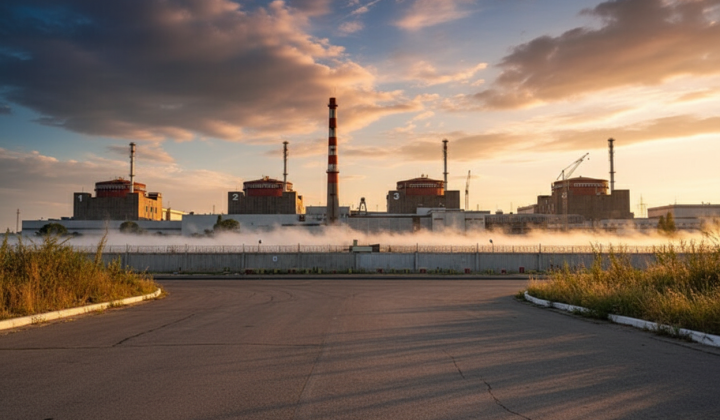
Local Ceasefire Agreement Reached
According to Главком: The International Atomic Energy Agency (IAEA) has confirmed that Ukraine and Russia have agreed to a local ceasefire to allow repairs to a critical power line supplying the Zaporizhzhia Nuclear Power Plant. IAEA Director General Rafael Grossi announced the agreement, stating it will permit essential repair work to begin. This development is a rare instance of cooperation on nuclear safety since Russia's full-scale invasion began in February 2022.
The need for repairs became urgent after the last backup 330 kV power line was damaged on January 2. Prior to this, the plant was relying on just a single 750 kV line for external power, creating significant operational risks. The situation was further highlighted when the plant lost power from one of its high-voltage lines overnight on January 3, underscoring the fragility of its energy supply.
IAEA's Role and Ongoing Cooperation
An IAEA team has already departed Vienna for the work area to monitor the process and ensure its continuity. Rafael Grossi noted that the agency continues to work closely with both sides to uphold nuclear safety. In a separate diplomatic context, the 12th point of a U.S.-proposed peace plan suggests joint management of the Zaporizhzhia plant involving Ukraine, the United States, and Russia.
The local ceasefire deal represents a crucial step in safeguarding nuclear facilities in Ukraine, particularly amid ongoing military conflict. Restoring the damaged power line is vital for stabilizing the plant's power supply, which in turn is critical for the broader safety and security of the region.
The IAEA's collaboration with Ukraine and Russia could lay the groundwork for further dialogue and enhanced nuclear safety, even amidst the current regional tensions.
Rafael Grossi

Read also