How AI Is Directing Strikes Up to 200 Kilometers: Ukraine's Defense Ministry Explains

Artificial Intelligence in the Ukrainian Armed Forces
According to Главком: Ukraine's Ministry of Defense, in coordination with the General Staff, has announced the deployment of artificial intelligence technologies to enhance medium-range strike capabilities. As part of this initiative, an additional 5 billion hryvnias were allocated for military equipment procurement. These efforts have enabled the Defense Forces to quadruple the scale of destruction inflicted on Russian logistics, including depots, hardware, command centers, and supply routes at operational depth.
Key Capabilities of the New Systems
The primary areas under Russian electronic warfare control lie more than 50 kilometers from the front line. However, with the introduction of new technologies, onboard computers now analyze terrain features-such as roads and rivers-and cross-reference them with high-resolution satellite imagery, allowing target localization without relying on GPS.
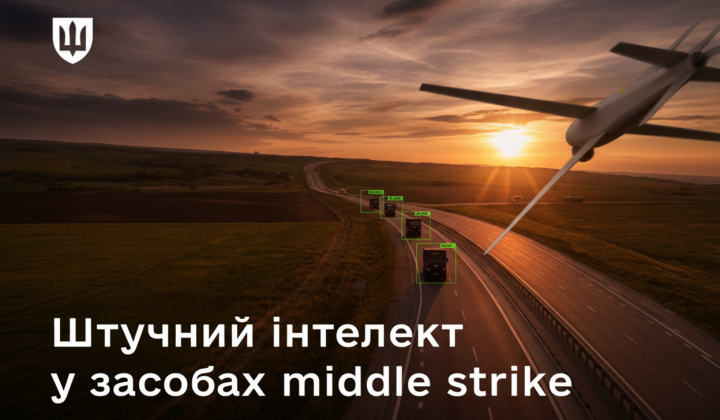
Autonomous navigation without GPS is a core feature of these new systems. The neural network processes live video feeds to automatically acquire targets. Its algorithms can identify launchers, radars, and other components of air defense systems.
Once a medium-range strike asset reaches the designated area, artificial intelligence takes over. The neural network analyzes the video stream in real time, identifies the target, and locks on automatically for maximum precision. - Ministry of Defense officials
These neural networks are trained to distinguish real military hardware from decoys based on geometry, texture, and thermal signatures from engine operation. This significantly improves strike accuracy. Additionally, flight paths for distances up to 200 kilometers are calculated using reconnaissance data, enabling the system to avoid enemy air defenses even before the mission begins.
Throughout May 2026, Ukrainian Defense Forces units systematically continued destroying logistics hubs, warehouses, command posts, and air defense assets. The military maintains fire control over key supply routes in temporarily occupied areas of Luhansk Oblast, Eastern Slobozhanshchyna, and the transport corridor between Berdiansk, Melitopol, and Dzhankoi. These actions are significantly weakening Russian logistics and boosting the effectiveness of Ukrainian forces in countering aggression.
The integration of artificial intelligence into Ukraine's armed forces highlights the critical role of innovation in modern warfare. The use of autonomous systems and neural networks substantially enhances combat capability, which could shift the trajectory of the conflict. In the midst of active hostilities, such technologies are becoming essential for ensuring the efficiency and precision of military operations. This also demonstrates that Ukraine is rapidly adapting to new technological challenges and leveraging them to defend its territory.
As Ukraine continues to innovate its defense strategies, the integration of advanced robotics has also played a crucial role in the conflict. Recent reports highlight how robotic combat missions have significantly altered the dynamics of the war, showcasing the effectiveness of technological advancements on the battlefield. Understanding these developments provides a clearer picture of Ukraine's evolving military capabilities.

Read also