International Researchers Overcome Accuracy Challenges in Silicon Spin Qubits, Paving the Way for Scalable Quantum Computers

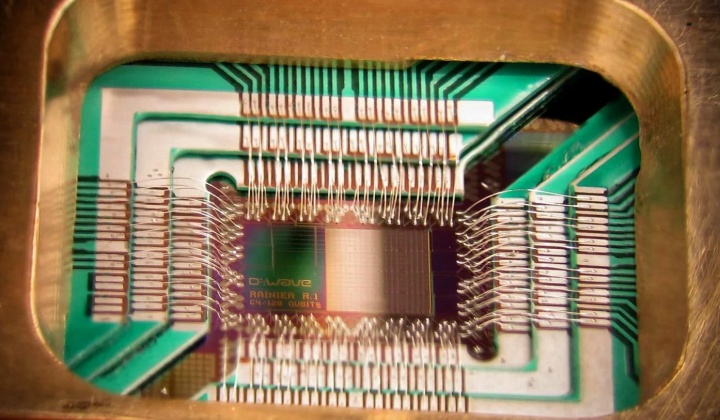
Quantum Technology Breakthrough
According to НВ — Техно: An international group of scientists has made a significant advancement in quantum technology by addressing the accuracy issues faced by silicon spin qubits when operated simultaneously. This progress marks a crucial step toward building large-scale, practical quantum computers. Researchers from the RIKEN Center for Emergent Matter Science, collaborating with partners worldwide, have introduced a compensation technique to counteract errors arising during concurrent qubit manipulation. Their findings were published in the journal Nature Physics.
Understanding Silicon Spin Qubits
Silicon spin qubits rely on controlling the spin of individual electrons embedded in a silicon matrix, fabricated using established semiconductor manufacturing processes. While this approach benefits from mature technology, operating multiple qubits in parallel causes Stark shifts induced by alternating currents, leading to phase errors and reduced precision. To overcome this, the team developed an innovative pairwise calibration method that eliminates the need to individually tune every qubit combination.
Testing on five qubits revealed interaction fidelities exceeding 99.99%, with the highest reaching 99.999%. Even when three qubits operated simultaneously, accuracy remained above 99.99%, and with all five active, fidelity was maintained around 99.9%. Nonetheless, completely eliminating errors remains challenging due to decoherence effects caused by strong microwave radiation.
The study demonstrates the feasibility of shared control lines for creating scalable quantum processors that are resilient to errors, potentially accelerating the future development of quantum technologies. This represents an important milestone toward the practical deployment of quantum computing devices.
This achievement marks a critical advance in quantum technology, as resolving precision issues during parallel qubit control unlocks new potential for building more powerful and efficient quantum computers.
Given the rapid evolution of this field, ongoing research is expected to drive further innovations in applying quantum computing across areas like cryptography, materials science, and artificial intelligence.
As researchers continue to tackle the complexities of quantum computing, advancements in qubit technology are essential. In a related breakthrough, scientists have achieved an impressive 99.85% accuracy in non-destructive reading of qubits. This progress highlights the ongoing efforts to enhance qubit performance and reliability, which are crucial for the future of quantum devices. For more information on this significant development, you can read about it here.

Read also