Top Companies Lose 20% of New Hires Within 45 Days

How to Build an Effective New Employee Onboarding Checklist
According to AIHR: For HR professionals, designing a strong onboarding checklist is a critical task. This guide walks through the key stages of employee integration-from accepting an offer through the first 90 days on the job-and includes statistics on how onboarding affects both retention and productivity. It also provides four free checklist templates tailored for HR, IT, managers, and training teams.
According to ManpowerGroup, 75% of organizations struggle to fill open positions. At the same time, Harvard Business Review reports that up to 20% of new employees leave their jobs within the first 45 days. These numbers highlight why a standardized onboarding process is essential: organizations that have one see 50% higher retention of new hires and 62% greater productivity.
O.C. Tanner’s 2025 Global Culture Report shows that only 62% of workers describe their onboarding experience as positive. Employees who had a good onboarding experience are 11 times more likely to feel they are thriving at work. Gallup also notes that it can take new employees up to 12 months to reach their full productivity potential.
Steps to Create an Effective Onboarding Checklist
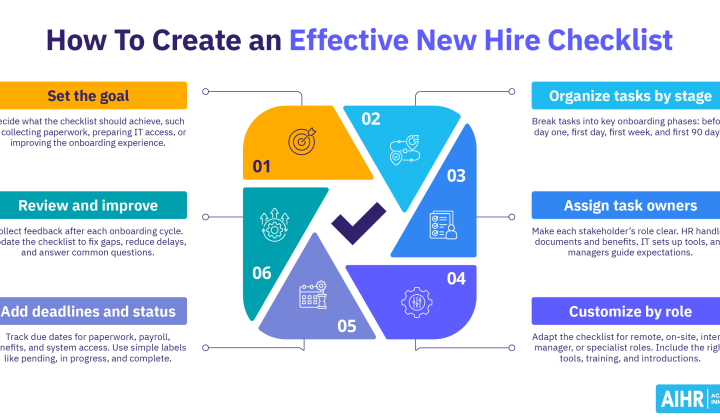
The average onboarding program lasts 90 days-enough time for employees to move past the initial "honeymoon phase." Dr. van der Merwe explains that by the end of 90 days, a new hire should achieve three things: connect with the organization, understand how they will contribute, and feel valued. The key steps to building a strong checklist include:
- defining the goal
- breaking down onboarding stages
- assigning responsibilities
- customizing for each role
- setting deadlines
- reviewing regularly
A new employee checklist should cover components such as:
- completing employment forms
- welcoming the new hire
- reviewing company policies
- setting up technology
- training
- introducing the team
- enrolling in benefits
Documents to prepare for a new employee include:
- Form I-9
- Form W-4
- state tax forms
- direct deposit authorization
- emergency contacts
- benefits forms
- acknowledgment of the employee handbook
- confidentiality agreements
- others
In summary, developing an onboarding checklist is a vital step in HR management that helps reduce turnover and boost productivity. Dr. van der Merwe also emphasizes that
“the value of relationships in onboarding should not be underestimated,”
highlighting how important it is for new hires to build connections with colleagues.
Creating an effective onboarding process is essential for companies that want to retain talent and improve employee performance. Given the high rate of early turnover, organizations must invest in structured programs that go beyond basic needs and foster a supportive environment. In doing so, they can improve not only retention but also their overall workplace culture.
Understanding the challenges in onboarding is crucial for companies aiming to improve employee retention. As highlighted by former Walmart executives, many organizations overlook key strategies that can lead to significant turnover during critical periods. For insights on common pitfalls and best practices, explore how effective crisis management can enhance your onboarding approach in our detailed article on the mistakes companies make during crises.

Read also