Canada-Led NATO Drills in Latvia Integrate Lessons from the Ukraine Conflict

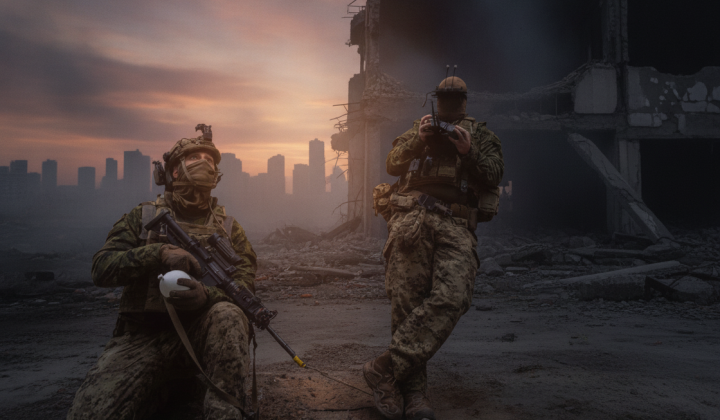
NATO Military Exercises in Latvia
According to ХВИЛЯ: A NATO brigade commanded by Canada is currently conducting training exercises in Latvia, incorporating insights gained from the ongoing war in Ukraine. Canadian Colonel David Brassard revealed that about 35% of Canada’s land forces are deployed in Latvia for these drills. Danish troops, acting as opposing forces, executed a nighttime drone attack that caused significant disruption among soldiers. Approximately 150 members of Denmark’s Royal Life Guards are participating, with most trained in basic drone piloting. However, around 90% of the drones used by the Danes during these exercises are reconnaissance models, with only a few designed for strikes.
Canadian Leopard tanks involved in the exercises lack anti-drone defenses or protective nets. Tank crews are now adapting to new drone warfare tactics, including being equipped with shotguns for close-range defense. An artillery battery equipped with M777 howitzers has adopted a new deployment strategy: pieces are spaced 12 kilometers apart and buried up to three meters underground. The battery commander, who served as an advisor in Ukraine until 2022, highlights the direct connection between these drills and current combat realities.
Russian Military Threats
Latvian President Edgars Rinkēvičs points out that the Russian military has grown stronger since four and a half years ago, though it has yet to launch a full-scale invasion. He emphasized,
"While Russia’s economy may not be as robust as before, its military is more dangerous than it was four and a half years ago, and we must take that into account."
During the exercises, unidentified drones were spotted over the area, possibly of Russian or civilian origin.
Former Latvian parliamentarian Jūris Jurašs criticized the exercises’ effectiveness compared to Ukraine’s real battlefield experience. He remarked,
"A tank on today’s battlefield is like a dessert cake-fighters with drones will compete to strike it first."
He argued that NATO forces are unprepared for modern warfare, having only observed the Ukraine conflict through television or social media, without truly grasping how much combat has evolved.
Ukrainian soldiers primarily participate in these exercises as the 'red' (opposing) force, collaborating with Latvian army units and the national guard. Kyrylo Budanov, head of the Ukrainian President’s Office, noted that Ukrainians are invited mostly to play the adversary role in NATO drills. Latvian Defense Minister Raivis Melnis, who served in Ukraine during the war, stressed the importance of NATO adjusting to contemporary conflict with Russia. He stated,
"Russia is aggressive. It’s critical to understand that Russia does not seek peace. Ukraine is the only country in the world that truly knows how to fight Russia."
These ongoing exercises in Latvia continue to offer NATO vital lessons as the alliance works to evolve its strategies against emerging threats in modern warfare.
The drills highlight NATO’s commitment to strengthening defense capabilities among member states amid increasing dangers posed by Russia. The growing significance of adapting to new technologies, particularly drones, is evident as the war in Ukraine reshapes combat tactics. The involvement of Ukrainian forces underscores the value of their frontline experience, helping NATO enhance its preparedness for current and future conflicts.
As NATO continues to enhance its military readiness in response to evolving threats, the integration of advanced counter-drone strategies has become increasingly vital. This is underscored by insights from Ukrainian experts, who have been advising NATO on effective measures to counter drone attacks. For a deeper understanding of these critical developments, explore how Ukrainian specialists are guiding NATO in adapting to modern warfare challenges.

Read also