Scientists Rescue Galápagos’ Rarest Flower, Galvezia leucantha, From the Brink of Extinction

Only Six Wild Bushes Left in 2007
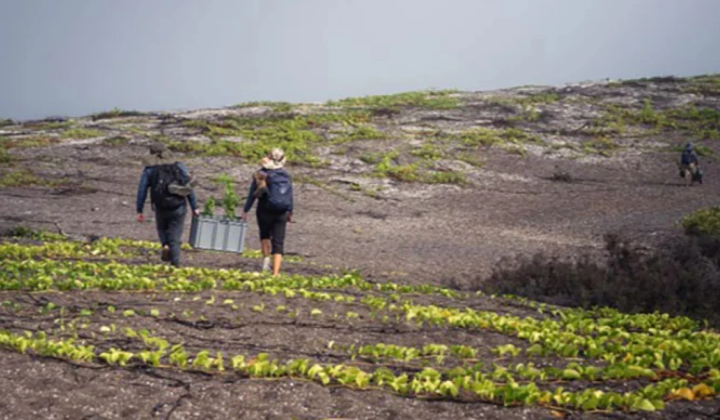
According to НВ — Техно: In a groundbreaking conservation effort, researchers have made significant strides in reviving the rarest flower of the Galápagos Islands-Galvezia leucantha subsp. leucantha. By 2007, this species survived in the wild solely as six individual bushes on Isabela Island. Through a collaboration between the Charles Darwin Foundation and the Galápagos National Park Directorate, seedlings are now being cultivated and planted onto volcanic rock to restore the population.
Back in 2007, just six wild bushes of Galvezia leucantha subsp. leucantha remained on the slopes of Darwin Volcano on Isabela Island. The native vegetation had been devastated by feral goats and other introduced animals, creating major challenges for conservation. Scientists collected seeds and developed nursery propagation techniques to grow seedlings. As part of the Galápagos Verde 2050 initiative, 94 young plants were reintroduced onto volcanic substrates.
Innovative Techniques Support Survival
To boost the survival rates of these seedlings, researchers employed Groasis Waterboxx water-saving devices, which achieved a 100% survival rate in trials. A key biological trait of this plant is its long-term investment in root development within basalt crevices before its shoots emerge above ground. Recently, four wild sprouts were found growing naturally on the lava fields, indicating successful natural regeneration without human aid.
Although a wave of young plants succumbed to drought, the restored bushes are now flowering and producing viable seeds. The flowers have been reintroduced to Tagus Cove, where the last documented herbarium specimen was collected 60 years ago. Currently, 28 mature bushes of Galvezia leucantha subsp. leucantha thrive in the wild across the archipelago, showcasing the success of these conservation efforts.
The recovery of Galvezia leucantha subsp. leucantha highlights the critical importance of biodiversity preservation amid human-induced threats. Utilizing cutting-edge technologies like water-conserving devices exemplifies how modern science can aid the revival of endangered species. This achievement marks a vital step toward protecting the Galápagos’ unique ecosystems and natural heritage for future generations.
In addition to the remarkable recovery of Galvezia leucantha, recent scientific advancements have also shed light on the history of the Galápagos ecosystem. For instance, an analysis of museum specimens has unveiled the existence of two extinct species of Galápagos tortoises, highlighting the importance of conservation efforts in preserving the unique biodiversity of the islands. To learn more about these fascinating discoveries, visit the latest findings on extinct tortoise species.

Read also