German Military Tests AI-Enabled Kamikaze Drones During 'Freedom Shield 26-II' Exercises in Lithuania

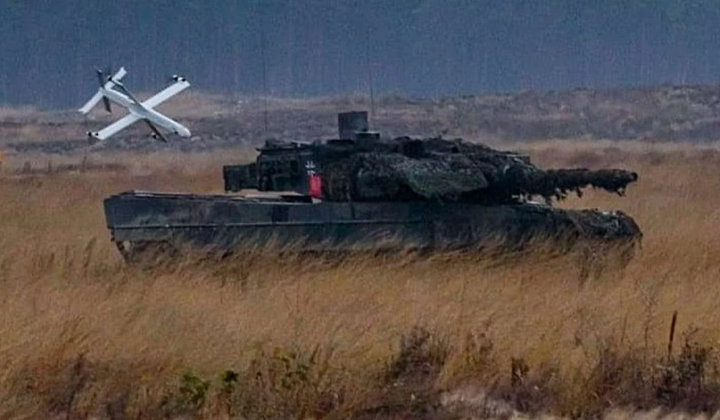
AI-Powered Kamikaze Drones Put to the Test by German Forces in Lithuania
According to НВ — Техно: Near the Belarusian border in Lithuania, the German army trialed two advanced kamikaze drones-the Helsing HX-2 and STARK Virtus-on November 26, 2026, as part of the "Freedom Shield 26-II" military drills. These tests aimed to showcase precise strike capabilities against enemy battle tanks, bolstering NATO's defense posture along its eastern frontier.
Drone Specifications and Capabilities
The Helsing HX-2 is an electric loitering munition featuring fixed wings with an X-wing design, capable of engaging targets up to 100 kilometers away. Meanwhile, the STARK Virtus is an electric loitering drone with vertical takeoff and landing (VTOL) capabilities, extending its operational reach to approximately 130 kilometers. Both drones incorporate artificial intelligence that allows autonomous target recognition, tracking, and re-identification. During demonstrations, inert warheads were used to simulate strikes on armored vehicles.
Earlier in November 2026, these systems underwent qualification trials at Germany's WTD 91 test range in Meppen. Lieutenant General Christian Freuding, Inspector of the German Army, observed the demonstrations and highlighted Germany’s commitment to enhancing its combat readiness.
The exercises took place at Lithuania’s Rudninkai training ground, involving around 3,800 soldiers from eight NATO member countries. The two drones offer complementary capabilities in combat scenarios: STARK Virtus's VTOL functionality eliminates the need for traditional launch infrastructure, increasing its flexibility across diverse operational environments.
Additionally, Germany’s 45th Panzer Brigade, permanently stationed in Lithuania, is evolving into a digitally networked armored reconnaissance unit. The brigade is expected to grow to roughly 5,000 personnel and 2,000 military vehicles by the end of 2027.
It is important to note that the trials revealed vulnerabilities in the drones’ resilience against intense electronic warfare attacks, a critical factor to address in future developments.
The deployment of the Helsing HX-2 and STARK Virtus drones underscores Germany’s efforts to strengthen NATO’s eastern defenses amid rising geopolitical tensions. Incorporating cutting-edge AI technologies into military hardware promises to transform battlefield tactics and improve operational effectiveness. However, ensuring these systems can withstand electronic warfare challenges remains a key priority for their successful integration in real combat environments.
As military forces explore innovative technologies, the US Army's recent trials of AI-driven acoustic sensors to detect drones in South Korea highlight the growing integration of artificial intelligence in modern warfare. Such advancements not only enhance operational efficiency but also reflect a broader trend in NATO's collective defense strategies.

Read also