Oregon Health & Science University Reveals Low-Frequency Sounds Trigger Coordinated Inner Ear Vibrations

Insights from Oregon Health & Science University
According to НВ — Техно: Researchers at Oregon Health & Science University have discovered that low-frequency sounds can induce synchronized vibrations in distant regions of the cochlea within the inner ear. This finding challenges the long-held place theory of frequency encoding, which dates back to the 1960s and is based on the pioneering work of Georg von Békésy. Von Békésy was awarded the Nobel Prize in Physiology or Medicine in 1961 for his foundational studies on auditory perception.
Key Findings of the Study
Using optical coherence tomography on guinea pigs, the study observed that movements in separate areas of the inner ear often occurred simultaneously, indicating a more intricate mechanism behind how low-frequency sounds are processed. This research builds on earlier work from 2022 that also identified unusual cochlear responses to low-frequency stimuli.
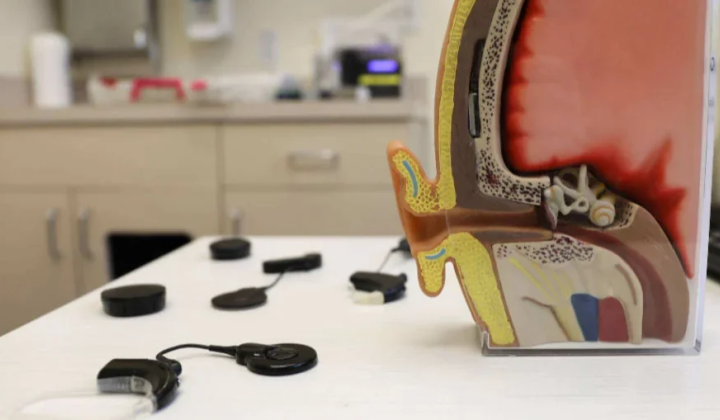
Current cochlear implants transmit sound information via electrodes that stimulate specific cochlear regions according to frequency. However, these new insights suggest that electrical stimulation strategies may need to become more complex to better replicate natural hearing. Difficulties in perceiving low-frequency sounds can especially impair speech understanding amid background noise.
"The brain likely distinguishes sound frequencies by more than just which inner ear region is activated. This points to additional auditory processes yet to be explored," stated Larry Trussell, director of the Oregon Hearing Center.
This discovery holds promising implications for advancing hearing technologies, potentially leading to improved cochlear implant designs and treatments for hearing impairments. It also emphasizes the importance of deepening our knowledge of auditory processing mechanisms to enhance hearing aids and speech comprehension in noisy environments.
This groundbreaking research aligns with other studies that explore the intricate relationship between sound and auditory processing. For instance, recent findings indicate that pink noise stimulation during sleep enhances brain waste clearance, shedding light on the broader implications of sound on neurological health. Understanding these connections could further inform advancements in hearing technology and cognitive function.

Read also