70% of Architectural Blocks Restored to Original Positions in the Temple of Zeus Lepsinos at Euromos

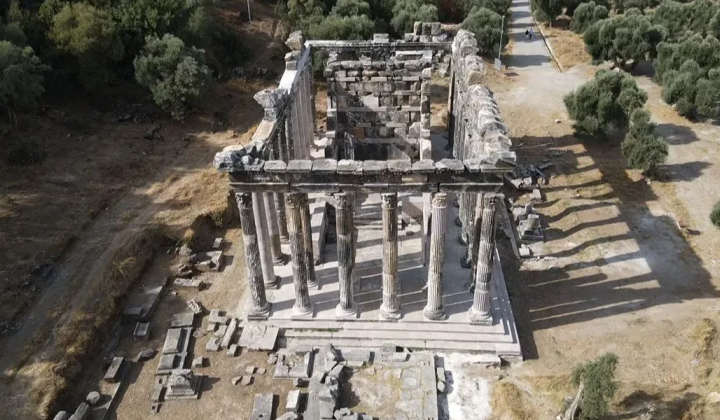
Restoring the Temple of Zeus Lepsinos
According to НВ — Техно: The restoration of the Temple of Zeus Lepsinos, located among the ruins of the ancient city of Euromos in Turkey's Mugla province, has successfully brought back much of its original appearance. Approximately 70% of the temple's architectural blocks were carefully repositioned to their initial locations. Constructed during Emperor Hadrian's reign between 117 and 138 AD, this temple stands as a significant example of Corinthian order architecture.
Details of the Restoration Process
Work began in 2015 with the creation of detailed architectural documentation. Led by Professor Abuzer Kizil, experts examined around 900 individual blocks. Each surviving stone was meticulously measured, numbered, and cataloged to accurately determine its place in the structure. The restoration also involved reinforcing the foundations and stabilizing the columns. Damaged parts that could not be reused were replaced using marble sourced from nearby quarries.
The temple features six columns at its front and eleven along each side. A significant portion of the temple’s colonnade remains intact at Euromos, with some columns bearing Greek inscriptions honoring patrons who contributed to the temple’s construction. Among the archaeological discoveries is a relief depicting a double-headed labrys axe adorned with human ears, symbolizing the ability of Zeus Lepsinos to hear the prayers of his followers.
Research reveals that the sanctuary dedicated to Zeus existed centuries before the Roman temple was built. Known in early records as Gyromos or Kiromos, Euromos was situated in the historical region of Caria along a route from the coast into the interior. Although overshadowed by the nearby city of Milas, Euromos was notable for its theater, agora, and fortifications.
This restoration marks a vital contribution to preserving Turkey's cultural heritage. The temple not only represents an important historical and architectural treasure but also provides insight into ancient religious practices and community structures. Renewed interest in the site may boost tourism, attracting scholars, visitors, and enthusiasts of classical architecture. Ongoing research and conservation efforts will be essential to safeguarding this legacy for future generations.

Read also