Revised Timeline Pushes Back Animal Origins to 700–800 Million Years Ago

Fossil Evidence of Earth's Earliest Animals
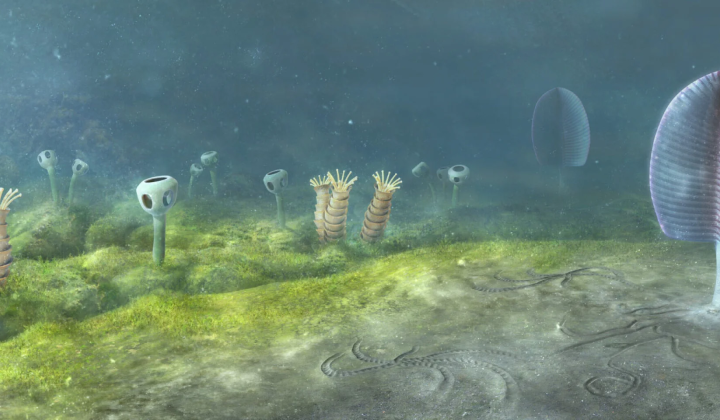
According to НВ — Техно: Recent paleontological studies reveal that the oldest uncontested animal fossils, linked to the Ediacaran biota, date back roughly 574 million years. Yet chemical traces-specifically lipid biomarkers associated with sponges-suggest that animals may have emerged much earlier, over 635 million years ago. These findings challenge previously accepted timelines used to pinpoint the origin of animals.
Paleontologist Orrin Lole Durbin from Virginia Tech highlights the longstanding mystery surrounding animal origins:
"For centuries, scientists have grappled with the timing of animal emergence on Earth. Definitive macroscopic fossil evidence only appears in the earliest Ediacaran macrobiota, approximately 574 million years ago, while microscopic fossil records do not confirm animals before the Ediacaran period." – Orrin Lole Durbin
Nevertheless, lipid biomarker data indicate that animals were likely present during the final 10–20 million years of the Cryogenian period (717–635 million years ago).
Biota Deposits and Updated Origin Estimates
The Hesin biota in Mongolia, dating from about 550 to 526 million years ago, together with the Weng'an biota in China, have served as key reference points for estimating animal origins. Both fossil assemblages share similar preservation types; however, the absence of animal fossils in the Hesin biota-despite their presence in other regions-suggests that a lack of fossils does not necessarily imply that animals were absent. Ross Anderson emphasizes:
"The Hesin biota disproves the argument that the exceptional microscopic remains in Weng'an mean we would have found animal fossils in Hesin if they had existed at that time." – Ross Anderson
Molecular clock analyses and reassessments of older Tonian-age calibrations now place the emergence of animals between approximately 800 and 700 million years ago. Concurrently, unique Australian fossils dated to 1.7 billion years ago underscore the crucial role of oxygen in the evolution of eukaryotes.
These new insights significantly extend the estimated timeframe for animal origins on Earth, prompting scientists to reconsider established evolutionary models for life’s development.
This breakthrough reshapes our understanding of early animal evolution and their environmental adaptation, suggesting multicellular life appeared far earlier than previously believed. It underscores the vital importance of integrating paleontological data within evolutionary biology. Researchers plan to continue exploring these findings to refine our knowledge of how life evolved on our planet.
As researchers continue to unravel the complexities of early animal life, recent discoveries in Norway reveal a remarkable three-dimensional charniid fossil dating back 560 million years. This find not only enriches our understanding of the Ediacaran biota but also highlights the ongoing quest to pinpoint the origins of multicellular organisms on Earth.

Read also