Europe’s First Major Three-Dimensional Charniid Fossil in Decades Uncovered in Norway, Dating Back 560 Million Years

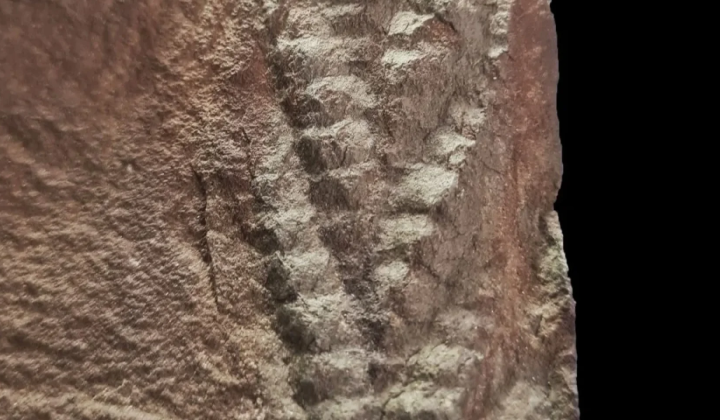
Ancient Animal Fossil Mistaken for Fern Found in Norway
According to НВ — Техно: In the Arctic region of Finnmark, Norway, scientists have discovered one of the oldest known three-dimensional fossils of a charnia, an animal that lived around 560 million years ago. This remarkable find was uncovered inside a fractured rock fragment during research led by Dr. Jørik Veenma from Cambridge University. The results were published in the journal Palaeontology, marking the first significant discovery of this kind in Europe in several decades.
The Significance of the Discovery
Charnia belongs to a group of primitive invertebrates from the Ediacaran period. These creatures lacked mouths, internal organs, or eyes, and fossils of soft-bodied organisms from this era are exceptionally rare due to their absence of hard skeletons. The fossil’s preservation was enabled by an ancient underwater landslide that swiftly covered the living organism, filling its body cavity with mineral sediments before it could decompose. This process preserved the fossil’s three-dimensional shape, allowing scientists to identify tiny longitudinal ridges along the body’s branches.
Alongside the charnia, researchers found traces of a previously unknown ecosystem featuring dome-shaped organisms resembling umbrellas. Professor Neil Davies commented:
“Near the charnia, we discovered evidence of an entire unknown ecosystem composed of strange dome-like organisms that looked like umbrellas.”
This discovery expands our understanding of the early distribution of animals on Earth and opens new avenues for exploring complex life forms in other underexplored northern regions. The research team intends to continue their investigations in these areas, aiming to uncover further evidence of the origins of complex life.
Such findings are crucial for studying animal evolution, offering insights into the appearance of early life forms and the ecosystems that existed on our planet hundreds of millions of years ago. Deepening knowledge of the Ediacaran period helps scientists trace connections between simple and complex organisms and understand their adaptive strategies in dramatically different environmental conditions. This breakthrough also highlights Norway’s importance as a rich source of geological and paleontological discoveries that shed light on Earth’s biological history.
This groundbreaking discovery in Norway is reminiscent of another remarkable find in paleontology, where a feather from an extinct water bird was discovered within fossilized Tyrannosaur droppings. Such findings not only highlight the complexity of ancient ecosystems but also enhance our understanding of the interactions between species millions of years ago.

Read also