Manager Trust Surges 12x, New State of Recognition Report Shows

Why Employee Surveys Matter
According to Achievers: Employee surveys have become a vital tool for gathering feedback, fostering engagement, and building trust within teams. According to the 2026 State of Recognition Report, which surveyed 3,000 workers worldwide, regular acknowledgment plays a pivotal role in boosting both productivity and trust between staff and their managers. Specifically, employees who receive recognition on a weekly basis are 12 times more likely to trust their manager, 8 times more likely to recommend them, 2.6 times more likely to perform at a high level, and 9 times more likely to feel a strong sense of belonging to their team.
Gallup research highlights that organizations in the top 25% for engagement see 23% higher profitability, 81% lower absenteeism, and up to 43% less turnover. This underscores how recognition and engagement directly influence business outcomes. Additional studies-such as those by SHRM, cited by Forbes-show that 60% of workers consider benefits a key factor in deciding whether to stay or leave their job. Employee recognition is increasingly recognized as a cornerstone of workplace culture and retention, and this report reinforces the measurable advantages of consistent appreciation.
Action Plan for Effective Surveys
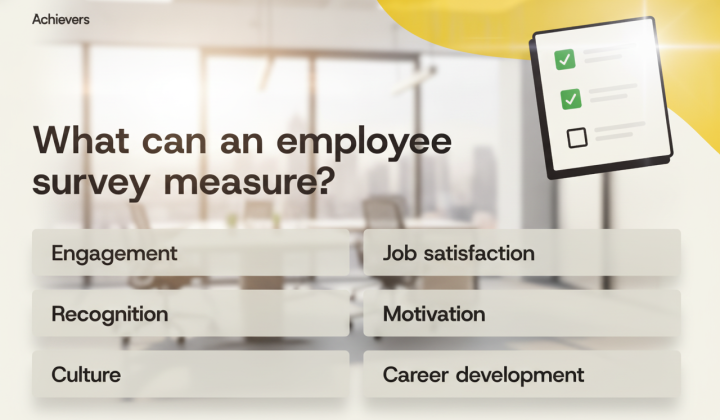
Platforms like Achievers offer Pulse and Voice of Employee tools that help organizations measure and analyze engagement levels. Crafting survey questions carefully is essential, focusing on themes such as:
- recognition
- culture
- morale
- values
- career growth
- leadership
- feedback
- health and wellbeing
- teamwork
To run surveys effectively, a six-step action plan is recommended. Start by prioritizing the most critical findings, then review results with employees, and convert the data into concrete actions. Subsequent steps include focusing on visible improvements, tracking progress using Pulse surveys, and closing the feedback loop. This approach can help organizations enhance engagement and satisfaction, which in turn positively impacts business performance.
The report’s data highlights the growing importance of employee recognition in today’s business landscape. Higher engagement and satisfaction not only improve team morale but also directly affect a company’s financial results. Prioritizing recognition can be a key strategy for successful people management and reducing turnover in a competitive labor market.

Read also