What a 3,000-Worker Survey Reveals About the Most Valued Rewards

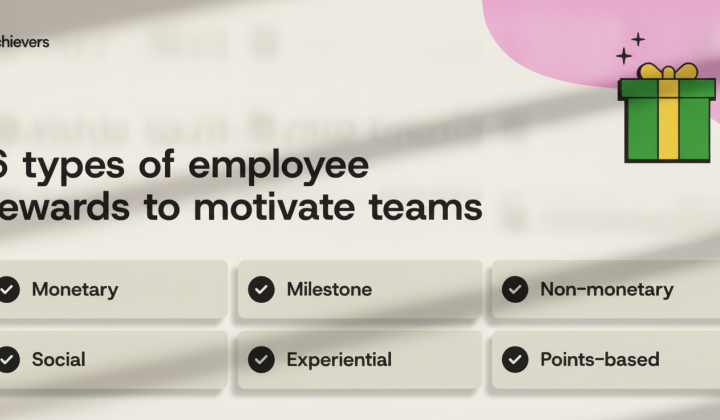
Employee Reward Categories
According to Achievers: Employee rewards are a central part of engagement and retention strategies, and this overview shows what workers actually value. In its own write-up, Achievers breaks down employee rewards into six broad types: financial, nonfinancial, experience-based, tenure-related, social, and points-based. A recent Achievers Workforce Institute survey of 3,000 workers found that 39% would most like branded gift cards, 26% prefer merchandise, 25% choose general-purpose gift cards, and 20% favor travel. These figures highlight that a mix of reward options helps accommodate different employee preferences.
Nonfinancial recognition also matters. The company's Engagement and Retention Report points out that the top reason workers quit is the absence of career advancement opportunities. That finding reinforces the need for reward systems to look beyond pay and benefits. Workers who receive meaningful recognition are 1.7 times more likely to believe they can build a long-term career with their employer.
A Broad Range of Reward Programs
The Achievers Travel Store, built on Switchfly's platform, gives companies access to more than 1.6 million travel options, including 750,000 hotels, 75,000 flight routes, 45,000 car-rental choices, and 390,000 activities. This breadth shows how organizations can use varied reward formats to strengthen engagement.
A case in point is Calgary Marriott Hotel, which consolidated several separate recognition initiatives into a single program built around its S.P.I.R.I.T. values. Employee engagement rose by 16%, satisfaction with rewards increased by 15%, and upsells of suites tripled. The result demonstrates how tailoring reward types to a workforce can boost motivation and performance.
The research also lists common contexts where rewards are deployed:
- staff recognition initiatives
- performance and incentive plans
- tenure and work-anniversary awards
- training and professional-development efforts
- benefit packages
According to the findings, best practice for running reward programs includes customizing rewards, recognizing employees promptly, linking recognition to corporate goals and values, embedding it in everyday workplace tools, and using recognition analytics to refine strategy.
Achievers also connects with widely used workplace platforms such as Workday, Microsoft Teams, Slack, Outlook, and Zoom, making it easier for employees to participate. That integration underscores the role of technology in modern reward programs. With these tools, organizations can build a motivating, positive workplace culture and raise overall performance.
The overall message is that a well-rounded reward system-combining financial incentives with intangible recognition-can have a significant impact on employee engagement and satisfaction. As competition for skilled talent intensifies, companies need to adapt their reward strategies to diverse expectations. Using current technologies and personalizing recognition may be among the most important levers for keeping high-performing employees.
Moreover, the emphasis on non-monetary recognition plays a crucial role in employee retention. Research indicates that companies implementing such recognition strategies experience a significant reduction in turnover rates. For a deeper understanding of how non-financial rewards can enhance staff loyalty, explore our detailed analysis on the impact of recognition on employee turnover.

Read also