Special Relationship at a Price: How Washington is Bargaining with London over the Falklands

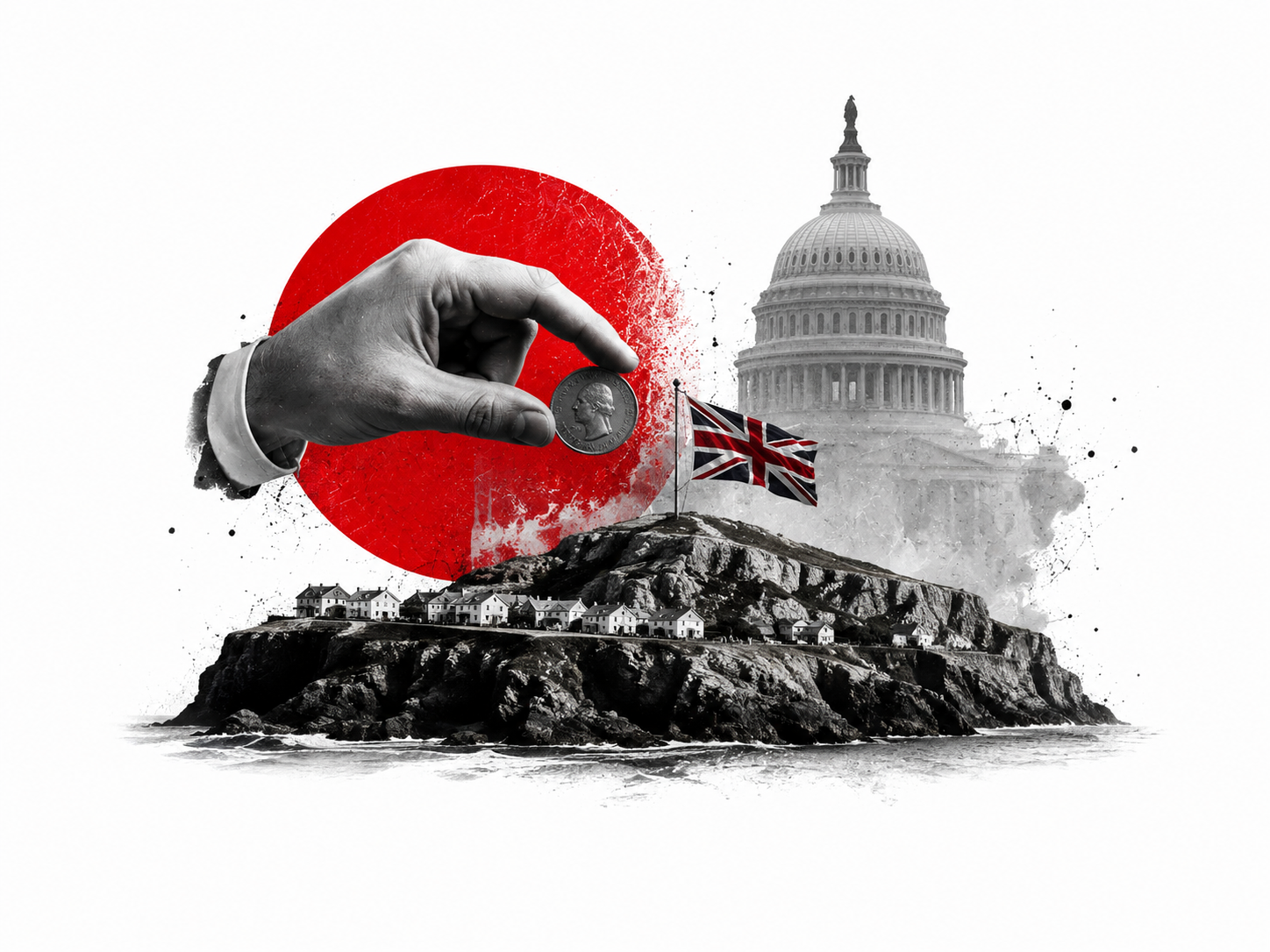
For the British establishment, it is hard to find a phrase more comforting than special relationship.
Britain has regarded its ‘special relationship’ with the United States as a strategic asset for decades. However, under the new American foreign policy arithmetic, even special relationships can have a price, and the bills are increasingly being presented in percentages of GDP.
Churchill, the Atlantic Charter, shared wars, nuclear cooperation, the Five Eyes, American presidents on Downing Street. For decades, London has convinced itself that it occupies a special place in Washington, inaccessible to most European allies.
Now, this romantic construct is confronted with a much more prosaic American accounting.
Reports from the British press suggesting that Washington's future position on the Falkland Islands could become part of broader pressure on London regarding defense spending have sparked predictable outrage. Particularly unpleasant figures are being thrown about in British discussions - 5% of GDP for defense and related security expenditures.
Whether the White House is truly ready to 'give' the Falklands to Argentina is much less clear than loud headlines might suggest.
But the mere possibility of using territorial matters as leverage speaks volumes about how transatlantic politics has changed.
The Price of the Umbrella
The American approach to alliances can increasingly be described in terms of balance.
How much are you spending?
How many soldiers can you deploy?
How many ships do you have?
And what portion of your own security costs are you still passing on to the American taxpayer?
For Washington, the demand to increase allied defense budgets is not new. What is new is the way in which this demand is being articulated.
In the past, American presidents convinced Europe to spend more for the sake of strengthening NATO. Now, increasingly, another logic is emerging: American protection is a service, and services should not be free.
This is particularly painful for Britain.
London has never considered itself a mere customer in the American security system. It has seen itself as a co-owner.
This distinction is fundamental.
The Ghost of 1982
The Falklands serve as an almost ideal tool for testing this confidence.
In 1982, Argentina seized the islands, expecting that Britain would not risk launching a large-scale operation thousands of kilometers from its shores.
Margaret Thatcher took the risk.
The Royal Navy dispatched an expeditionary force to the South Atlantic, British troops retook the islands, and the victory became one of the central myths of modern British statehood.
But the British were not fighting in a strategic vacuum.
The United States provided London with crucial intelligence, logistical, and political support. Washington did not win that war for Britain, but American assistance significantly eased the burden on British forces.
More than four decades later, the question sounds more uncomfortable.
Could Britain execute a similar operation today without American support?
The Empire Has Become More Expensive
The Royal Navy remains one of the most powerful naval forces in Europe. Britain possesses nuclear submarines, aircraft carriers, modern fighter jets, and professional armed forces.
But geography has not changed.
The Falkland Islands lie about 13,000 km away from Great Britain. Defending such territory requires not just ships but a complex system of basing, transport aviation, munitions, intelligence, satellite support, and immense logistical endurance.
This is where the distinction between a prestigious army and one capable of conducting a prolonged war far from home becomes evident.
The British Armed Forces have been downsized for decades. Ammunition stocks have decreased. The number of combat platforms has diminished. Restoring military-industrial capabilities requires money and time.
London can still defend the Falklands.
But the cost of that defense without Washington's support would be incomparably higher.
Milei Gains Leverage
For Argentina, the situation opens an interesting diplomatic window.
Buenos Aires has not relinquished its claims to the islands, which it refers to as the Malvinas. At the same time, Javier Milei's administration has built demonstrably close relations with Washington.
This does not mean that the Americans will change their position on the sovereignty of the archipelago tomorrow.
But for London, even something lesser would suffice.
If unconditional American political support transforms into conditional support, the strategic value of the special relationship automatically decreases.
Washington does not even need to ‘give’ the islands away.
It is enough to make clear that the diplomatic umbrella is no longer opened automatically.
A Lesson for Brussels
That is why this story is far greater than a few cold islands in the South Atlantic.
It illustrates a new model of American relations with its allies.
In the old model, there were permanent institutions, historical obligations, and strategic solidarity. Disputes arose within this system, but the system itself was rarely called into question.
The new model is much more transactional.
Security is exchanged for defense spending. Trade concessions for political loyalty. Access to American military power becomes a matter for negotiation.
In such a system, even a territorial dispute of an ally can turn into an additional line in the negotiation balance.
For Germany, France, Italy, and the rest of Europe, this is an unpleasant precedent.
If Washington is willing to engage in hard bargaining with Britain - a nuclear state, a UN Security Council member, and America's closest military partner in Europe - other allies may find it hard to expect a more sentimental approach.
Special, But Not Free
The greatest irony is that London has tried for decades to stay closer to Washington than to continental Europe.
Brexit has only intensified this dependency.
Britain has exited the EU's political construct, but it has not gained strategic autonomy from the U.S. On the contrary, in areas of defense, intelligence, and nuclear deterrence, the American connection remains critically important.
Now Washington can assess this connection just like it assesses other assets.
By price.
Thus, it is still premature to describe the Falkland story as a preparation for the 'handing over' of the islands to Argentina. Such a conclusion requires much stronger evidence.
But as a political metaphor, it is nearly perfect.
Once, the 'special relationship' meant that Britain could count on Washington simply because it was Britain.
Now, the answer increasingly may depend on another question:
How much are you spending on defense?

Read also