All 92 Rozetka Workers Survive Brovary Ballistic Strike Thanks to On-Site Shelter

Brovary Strike: Rozetka's Underground Shelter Kept Every Worker Safe
According to Рубрика — Суспільство: As Russia's military keeps targeting Ukrainian logistics infrastructure, companies have had to turn their facilities into safer spaces for employees. That preparation proved critical on August 5, 2026, when a ballistic assault hit Brovary near a Rozetka warehouse. Three rockets landed in the immediate vicinity; the building caught fire and burned for seven hours. Yet every one of the 92 employees working the shift made it out unharmed, protected by an underground shelter built at the facility. Rozetka owner Vladyslav Chechotkin described the measures behind that outcome.
From a Makeshift Bunker to a Full-Scale Refuge
The first protective structure appeared at the site in March 2022, when the front line was roughly three kilometers away. With heavy equipment in short supply because it was being used for defense fortifications, the company buried shipping containers underground and covered them with timber and earth. “Back in 2022, machinery was hard to come by - everything was going toward building defensive lines. And we couldn't undertake anything large anyway; business was barely functioning,” Chechotkin recalled.
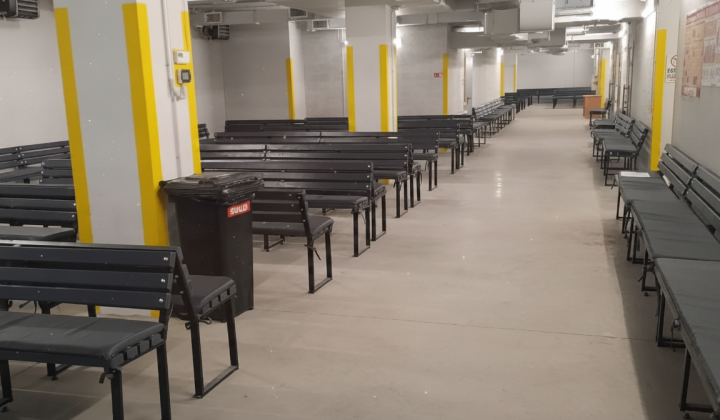
Later, Rozetka built a proper underground bomb shelter designed for 600 people. It includes:
- blast-protected ventilation;
- a smoke extraction system;
- restrooms;
- water and food supplies;
- two independent backup power sources;
- accommodations for people with limited mobility.
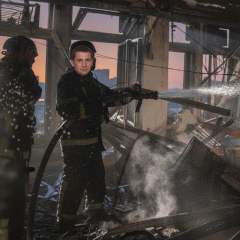
Chechotkin also mentioned the addition of explosion-resistant ventilation with mechanical drives and a fuel storage room separated from the shelter itself. During repeated air raids, the firefighters battling the blaze also used the bunker to take cover. The site has a medical point with a rotating medical team on duty.
Wider Impact of the August 5 Attacks
The attack destroyed Rozetka's Brovary warehouse complex and also devastated Nova Poshta's Kyiv sorting center. At Rozetka, no employees were hurt. The Nova Poshta facility saw three people killed and eight injured. Epicenter's production and logistics sites were also damaged, with one worker dead and three wounded; the company halted ceramic tile production and said it would shift output to other locations. Logistics warehouses belonging to Puma, Intertop, and Toyota were destroyed as well, with no casualties but a significant loss of goods.
“Our warehouse burned for seven hours. The Russian attack dragged on for a long time, and rescuers couldn't reach the scene. Not a single person inside suffered from explosions, debris, or smoke - even though it was a real hell,” said Chechotkin.
The episode shows how vital workplace safety measures have become in wartime. Investing in shelters and protective infrastructure can mean the difference between life and death for employees, and this attack underscores how quickly companies must adapt to the growing risks of operating under fire.
The recent ballistic strike in Brovary not only tested the resilience of Rozetka's safety measures but also impacted their operational capabilities. Understanding the full scope of this incident is crucial, as it directly affected the delivery of Rozetka products on that day. For insights on how the attack influenced their logistics and service continuity, read more about the effects of the Brovary warehouse attack.

Read also