North Korea Commissions New Destroyer Armed with Nuclear-Capable Missiles

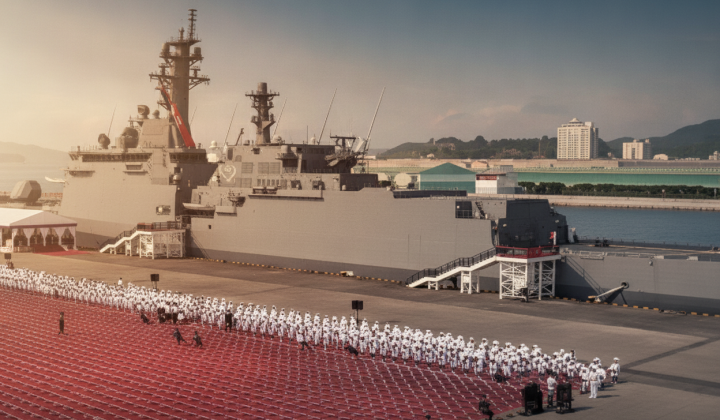
North Korea's Latest Warship
According to Главком: North Korea has officially launched a new 5,000-ton destroyer named the Cho Hyon. The commissioning ceremony took place at the western port of Nampo. The vessel has been integrated into the North Korean Navy and is tasked with defending the country’s western coastline.
The Cho Hyon is equipped with anti-air and anti-ship weaponry, as well as ballistic and cruise missiles capable of carrying nuclear warheads. Some South Korean officials and experts have speculated that Russia may have provided assistance during the ship’s construction. However, certain analysts have raised doubts about whether the vessel is fully prepared for active deployment.
Expanding Military Capabilities
North Korean leader Kim Jong Un has instructed the military to accelerate the development of new weaponry and continue strengthening the country’s nuclear arsenal. He stated that
“warships like the Cho Hyon demonstrate that the nuclear armament of our navy is progressing according to plan”
.
According to analysts, North Korea’s nuclear stockpile is approaching a critical threshold and is now capable of overcoming U.S. ground-based missile defense systems.
The deployment of this new destroyer underscores North Korea’s ongoing push to expand its military power, particularly in the realm of nuclear technology. This development could have serious implications for regional security, especially amid rising tensions between North Korea, its neighbors, and the United States.
As part of the North Korean Navy, the Cho Hyon may serve as a key asset in Pyongyang’s strategy to project strength both regionally and on the global stage.
As North Korea continues to bolster its military capabilities, the recent commissioning of the Cho Hyon destroyer aligns with ongoing efforts to enhance its nuclear arsenal. This development follows Kim Jong Un's inspection of a new uranium enrichment facility, signaling a broader strategy aimed at advancing the nation's defense technologies. Such initiatives raise significant concerns regarding regional stability and security dynamics.

Read also