3D-Printed Plastic Rocket Engine Successfully Tested with Water Cooling

Experiment Tests Plastic Rocket Engine Durability
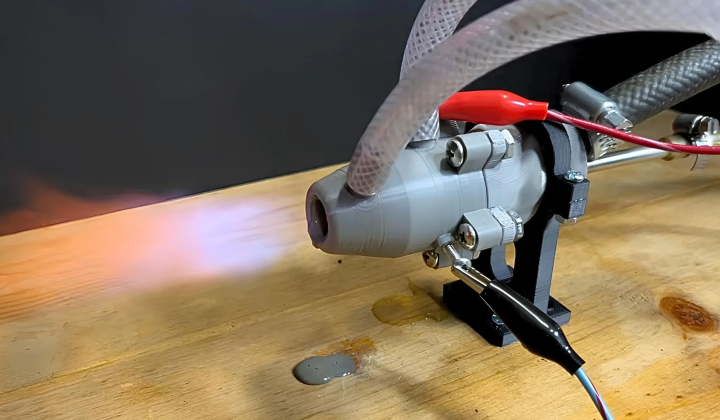
According to НВ — Техно: On May 26 at 11:00 AM, a blogger conducted an experiment to determine whether a plastic rocket engine, manufactured using an FDM 3D printer, could withstand extreme temperatures through the use of a water cooling system. Earlier versions of the engine lacked any cooling mechanism and melted almost immediately after ignition. Initially, electrodes generating an electric arc were used to ignite the engine, but the blogger later switched to a grill lighter after the electrodes became deformed.
Engine Design and Test Results
The engine was designed with double walls to allow water to circulate. A small pump kept the water flowing, providing cooling. The upgraded engine featured partial cooling and an intact combustion chamber, but the lower part of the nozzle still overheated, limiting overall performance. In response, the blogger created a new version of the engine with full water cooling. This version operated longer and held its shape better, but the test was cut short by a water leak. Water seeped into the combustion chamber and extinguished the flame.
The experimenter concluded that materials used in FDM printing are poor conductors of heat. Thinner walls could potentially improve heat dissipation, but that would also weaken the structure. Additionally, the cooling system adds extra weight due to the water tanks, pump, and tubing. While most people address the melting issue by switching to different materials, this blogger attempted to alter the thermodynamics instead.
This experiment highlights the challenges engineers and hobbyists face when using 3D printing in high-temperature environments. Although FDM printing technology offers great potential for creating complex shapes, its limitations in heat resistance and mechanical strength remain critical issues for further research. The development of new materials and advanced cooling techniques could be key to successfully using 3D-printed components in rocketry and other fields where high temperatures are common.

Read also