Water Cooling Saved a Plastic Rocket Engine from Melting

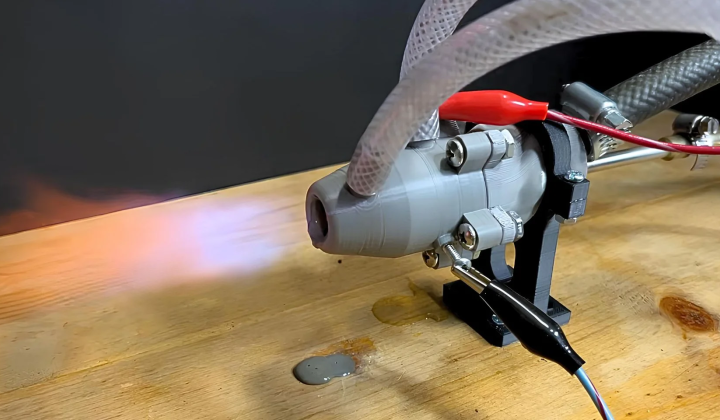
Testing a 3D-Printed Plastic Rocket Engine
According to НВ — Техно: On May 26 at 11:00 AM, a blogger conducted an experiment to determine whether a plastic rocket engine, produced using an FDM printer, could withstand extreme heat thanks to a water-cooling system. Earlier versions of the engine lacked any cooling mechanism and melted almost immediately after ignition. The updated design incorporated double walls with water circulating between them, which improved the engine's heat resistance. However, during testing, issues arose with water leaks and overheating in areas that were not cooled.
Technical Details of the Experiment
The engine used separate supplies of propane and air, with water flowing through internal channels via a small pump. For ignition, electrodes generating an electric arc were initially employed, but these deformed over time, leading the blogger to switch to a grill lighter. The revised engine, featuring a cooled combustion chamber section, performed better: that part remained intact, while the uncooled lower nozzle section began to overheat and sag.
The blogger then created a new version of the engine with full water cooling. During tests, it operated longer and retained its shape. The test ended when a water leak extinguished the flame. The author concluded that the issue might stem from plastic's poor thermal conductivity. Despite this, the experiment demonstrated that active cooling significantly enhances a plastic engine's resistance to overheating.
Interesting Engineering notes that most people address the melting problem by switching materials.
Instead, the blogger opted to alter the thermodynamics. Plastic rocket engines typically fail almost immediately after ignition, but this new approach-reminiscent of regenerative cooling systems used in liquid-fueled rocket engines-opens up fresh possibilities for further research in this area. However, the cooling system adds extra weight due to water tanks, a pump, and tubing, which could become a critical factor as such technologies evolve.
This experiment highlights an innovative strategy for tackling thermal stability challenges in plastic rocket engines. The use of water cooling could represent a significant step forward in technologies related to 3D-printing rocket components. It may encourage further exploration and refinement of designs that leverage novel materials and methods to boost rocket engine efficiency.

Read also