Night Sky Brightness Could Jump 300% If Over a Million Satellites Reach Orbit


Astronomers Sound the Alarm: The Night Sky May Never Be the Same
Could a Million-Plus Satellites Block Humanity’s View of the Stars?
According to Radiotrek — Світ: On Tuesday, August 4, 2026, at 22:40, reports emerged that several companies intend to place more than one million satellites into orbit. These spacecraft would support orbital data centers and a range of other commercial ventures. Among the most striking proposals comes from the startup Reflect Orbital, which aims to deploy 50,000 mirrors designed to beam sunlight down to Earth during nighttime hours.
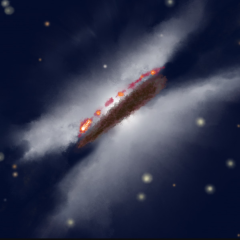
If every planned mirror becomes operational, the overall brightness of the night sky could rise by roughly 300%. Such a dramatic increase would make observing the cosmos far harder and would interfere with ground-based telescopes. Scientists caution that this could eventually produce a glowing band encircling Earth, similar in appearance to Saturn’s rings. Reflect Orbital expects to send up its first demonstration satellite before the end of this year.
This information was originally reported by Universe Space Tech and Radio Track: NEWS.
The plans have already triggered concern among astronomers and researchers, who warn that lasting changes to the night sky could have major consequences for astronomical research. This situation highlights the need to find a balance between advancing technology and protecting natural phenomena. Experts are urging broad discussion about the fallout from such a massive deployment of satellites, noting that it could severely disrupt observations and our broader understanding of the universe. Moving forward, finding workable solutions may require close cooperation among companies, scientists, and regulators to support innovation without sacrificing science.
As the debate intensifies over the potential impact of satellite proliferation on our night skies, a California company's recent approval to transmit sunlight from space underscores the growing intersection of technology and astronomy. This development raises further questions about how advancements in satellite technology could reshape our understanding of the cosmos and the implications for future astronomical research.

Read also