California Firm Secures License to Beam Sunlight From Space at Night

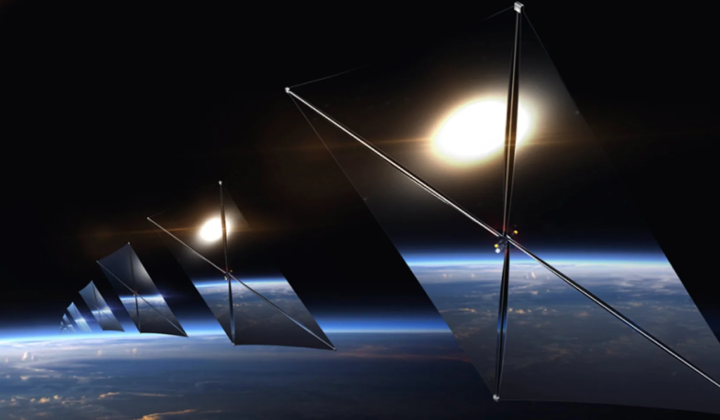
Eärendil-1 Satellite Set for Launch
According to НВ — Техно: Reflect Orbital, a California-based company, has obtained a license from the U.S. Federal Communications Commission (FCC) to launch a demonstration satellite called Eärendil-1. The spacecraft will carry a thin-film reflector designed to bounce sunlight onto Earth's night side. The launch is scheduled for late 2026. The company plans to eventually deploy a constellation of 4,000 satellites by 2030-a goal that has already drawn sharp criticism from astronomers over potential light pollution.
Technical Specs and Public Response
Weighing 142 kilograms, Eärendil-1 will operate in a low Earth orbit at altitudes between 600 and 650 kilometers. Its reflector, measuring 18 by 18 meters, will capture sunlight and redirect it to the planet's dark hemisphere. Each pass will illuminate a ground area roughly 5 to 6 kilometers in diameter for several minutes. The satellite's active mission is expected to last about a year before it is deorbited.
The FCC approved the license on July 9, prompting a wave of public reaction. The company received approximately 1,900 comments, the majority of which were critical. Astronomers have voiced serious concerns about the impact on sky observations.
'For optical astronomy, this is an existential threat, and we hope regulators share that view.' - Betty Kioko, astronomer
She further noted that 'the beam reflected by these satellites is extremely intense-four times brighter than a full moon,' which could also affect wildlife in the illuminated area.
The primary goal of the Eärendil-1 project is to brighten the night sky and effectively extend daylight hours. However, astronomer Robert Massey described the initiative as 'quite catastrophic' from an astronomical standpoint. In response to the backlash, Reflect Orbital has commissioned an independent study on the technology's environmental impact and is preparing a coordination agreement with the U.S. National Science Foundation.
'We are grateful to the FCC for recognizing the importance of testing new technologies in space. This license is the first step toward a thorough evaluation of our technology's performance and the safeguards we have developed.' - Ben Novak, company spokesperson
The launch of Eärendil-1 marks a significant milestone in the development of space-based illumination technology, but it has also sparked serious concerns within the scientific community. The growing number of satellites in orbit could fundamentally alter the night sky, potentially harming astronomical research and natural ecosystems. It is crucial that Reflect Orbital takes these objections seriously and ensures the safe deployment of its technology, striking a balance between innovation and environmental stewardship.

Read also