French beaches record over 1,100 Portuguese man o' war stings

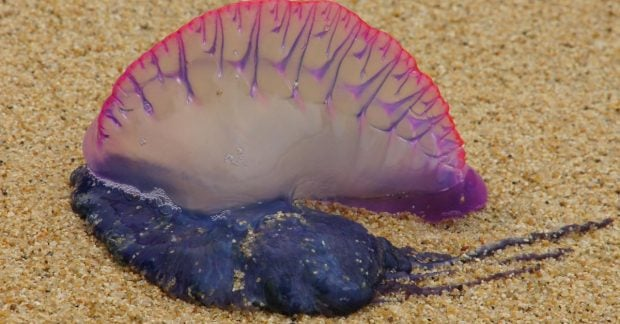
Portuguese man o' war invasions along France's Atlantic coast
According to УНІАН — Туризм: Since July, the Portuguese man o' war (Physalia physalis) has been washing ashore in large numbers on the beaches of southwestern France, particularly in the Basque Country. This has led to more than 1,100 recorded stings and the closing of dozens of beaches because of the danger these creatures pose. Local authorities and marine researchers are closely monitoring the situation.
The number of strandings has been growing since July along the Aquitaine coast. In the Basque Country specifically, more than 1,100 stings have been reported. Dozens of beaches have been closed to protect the public from these organisms. For instance, on August 11 at Petite Chambre d'Amour beach in Anglet, with water temperatures nearing 30°C, a red flag banned swimming.
Health risks and consequences
The Portuguese man o' war has a floating body that typically measures 10–30 centimeters, and its tentacles can extend as far as 30 meters. Its venom ranks among the strongest found in marine creatures, and the sting's burning effect may last for up to two hours. In severe cases, a sting can cause:
- severe pain;
- fainting;
- muscle problems;
- difficulty breathing that requires immediate medical attention.
"If someone is stung while far from shore, the pain can be so excruciating that they may be unable to swim back and might drown."
Elvire Antajan, researcher in zooplankton ecology at the French Research Institute for Exploitation of the Sea (IFREMER)
Caroline Sarrade, who heads the coastal and natural environments department in the Basque Country administration, said: "We have never witnessed beachings on this scale or with this frequency. The Portuguese man o' war has always been around, but only occasionally."
Although seeing the Portuguese man o' war at this time of year is not unusual, what stands out this summer is the sheer frequency of strandings. Elvire Antajan commented: "But seeing more man o' war on beaches does not necessarily mean there are more in the ocean." Researchers are looking into a possible connection between the unusual frequency of these strandings and climate change.
This situation may hit the local tourism economy hard, since beach closures reduce opportunities for recreation and resort visits. Moreover, the increased presence of the Portuguese man o' war could signal shifts in marine ecosystems caused by climate change, and it demands further study. Scientists continue to examine the issue in order to understand how climate change affects marine life and the safety of beachgoers.

Read also