How to Use a RACI Matrix for Clear Project Roles and Smoother Execution

Understanding the RACI Matrix
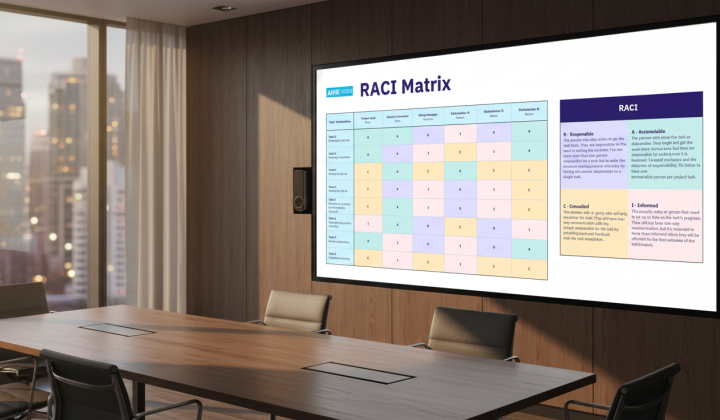
According to AIHR: A RACI matrix is a project management framework designed to clarify team member roles and responsibilities. This tool aims to boost project efficiency, especially when multiple stakeholders are involved. The acronym RACI stands for Responsible, Accountable, Consulted, and Informed. This model is also commonly referred to as a RACI chart or RACI model. It is a foundational tool in traditional project management methodologies like Waterfall.
Benefits and Applications of the RACI Matrix
The RACI model proves particularly valuable for large, complex projects requiring unambiguous role definitions. Beyond the standard RACI, other related models exist to structure project governance. For instance, the RASCI model adds a Supportive role, while DACI stands for Driver, Approver, Contributor, and Informed. Other frameworks include RAPID (Recommend, Agree, Perform, Input, Decide) and DARE (Deciders, Advisors, Recommenders, Execution stakeholders).
When should HR or project leaders implement a RACI matrix? It is most appropriate during large-scale project rollouts, in lengthy decision-making processes, when task ownership conflicts arise, or when workloads are unevenly distributed. Other suitable scenarios include:
- highly regulated industries,
- projects spanning multiple departments,
- situations with high employee turnover.
However, a RACI matrix may not be necessary in all cases. It can be excessive for small, co-located teams with strong communication and personal oversight of work, or for projects using agile methodologies like Scrum where roles are often more fluid.
The key advantages of using a RACI matrix are:
- enhanced clarity,
- clear accountability,
- improved communication,
- better decision-making,
- increased efficiency,
- superior coordination.
Creating the matrix involves several steps: first, list all project tasks and deliverables; next, identify all team members and stakeholders; then, assign RACI responsibilities for each task; finally, review, distribute, and socialize the completed matrix.
Common pitfalls to avoid when building a RACI matrix include:
- assigning more than one Accountable person per task,
- confusing the Responsible and Accountable roles,
- including too many people in the Consulted category,
- unnecessarily informing too large a group,
- overly detailing the matrix,
- leaving tasks without a clear owner,
- using a single, unmodified matrix for all projects,
- failing to share and update the matrix regularly.
Common formats for RACI matrix templates are Excel, Google Sheets, PowerPoint, and Word. This tool can become a vital part of your project management toolkit, providing a clear map of responsibilities and improving team communication.
Implementing a RACI matrix can significantly streamline management processes within organizations, especially for complex projects with numerous participants. It helps prevent misunderstandings and conflicts by ensuring a transparent distribution of roles and duties. Given the critical importance of clear communication and coordination in today's business environment, the RACI matrix remains highly relevant for teams aiming to boost their productivity and project execution effectiveness.
In addition to the RACI matrix, understanding team dynamics is crucial for successful project outcomes. The GRPI model offers a structured approach to identifying root causes of team dysfunction, which can significantly impact project execution. By exploring this framework, project leaders can gain insights into enhancing collaboration and communication within their teams. For more information on addressing team challenges, check out the detailed analysis in our article on the GRPI model.

Read also