A Four-Step Framework for Pinpointing Team Dysfunction: The GRPI Model

The GRPI Model
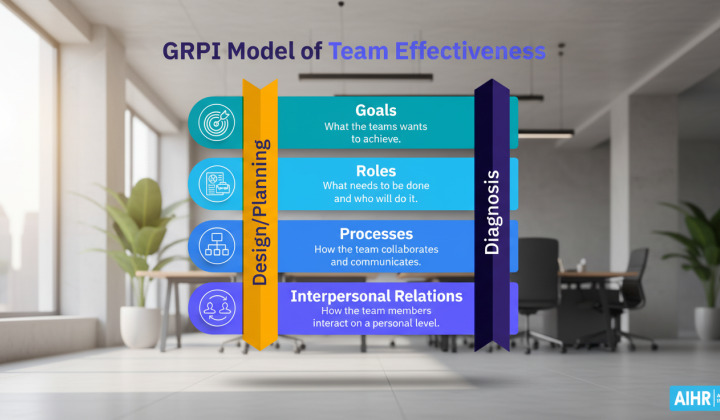
According to AIHR: Developed by Richard Beckhard in the 1970s, the GRPI model is a practical framework for diagnosing and improving team performance. It breaks down team effectiveness into four core components: Goals, Roles, Processes, and Interpersonal relationships. This structure helps teams identify the root causes of issues rather than just addressing surface-level symptoms. This model is widely used in organizational development and change management.
Research underscores the critical importance of team dynamics. McKinsey emphasizes that real value is created at the team level, not within isolated roles or functions, and has found a direct link between goal clarity and productivity. Deloitte reports that teams with clear mandates and decision-making authority execute tasks faster and with higher quality. Furthermore, Gallup notes that when managers communicate clearly during times of change and build trust, 95% of employees report high levels of confidence in their leadership.
Effectiveness and Limitations of the GRPI Model
The GRPI model is considered highly effective when teams are under pressure to deliver results and operational friction arises. It is particularly suitable during periods of change, such as strategic shifts, reorganizations, rapid growth, or the formation of new cross-functional teams. The model's key benefits include:
- A structured approach to problem diagnosis;
- A focus on underlying root causes;
- The creation of a shared language for discussing goals and interactions;
- Support for faster realignment during transitions.
However, the model does have limitations. It does not delve deeply into issues of individual capability or performance, is less effective for resolving deep-seated personal conflicts, and cannot replace broader organizational culture interventions. Applying the GRPI model requires discipline in following its sequence, and it functions best as a diagnostic tool rather than a standalone team development program.
Implementing the GRPI model involves several key steps:
- Selecting the right team and timing;
- Establishing ground rules for a reset;
- Conducting diagnosis in sequence;
- Clarifying goals;
- Defining and solidifying roles;
- Standardizing processes;
- Addressing interpersonal dynamics based on evidence.
It is crucial to implement the model in a way that integrates it into the team's ongoing workflow for continuous improvement, rather than treating it as a one-off workshop.
The GRPI model remains a relevant and valuable tool for organizations seeking to enhance team effectiveness, especially in fast-paced environments undergoing change and restructuring. Its use can help teams not only uncover and resolve problems but also build sustainable mechanisms for maintaining productive collaboration in the future. Given the central role of teamwork in the modern business landscape, understanding the GRPI framework can be a pivotal step for many organizations aiming to achieve success in their fields.
Understanding team dynamics is crucial for enhancing overall effectiveness. To dive deeper into practical strategies that can elevate HR teams, consider exploring essential development practices tailored to modern challenges. These insights can complement the GRPI model by providing actionable techniques to overcome obstacles in team performance.

Read also