«Missiles are needed in the sky, not in warehouses»: why Zelensky demands weapons from allies immediately
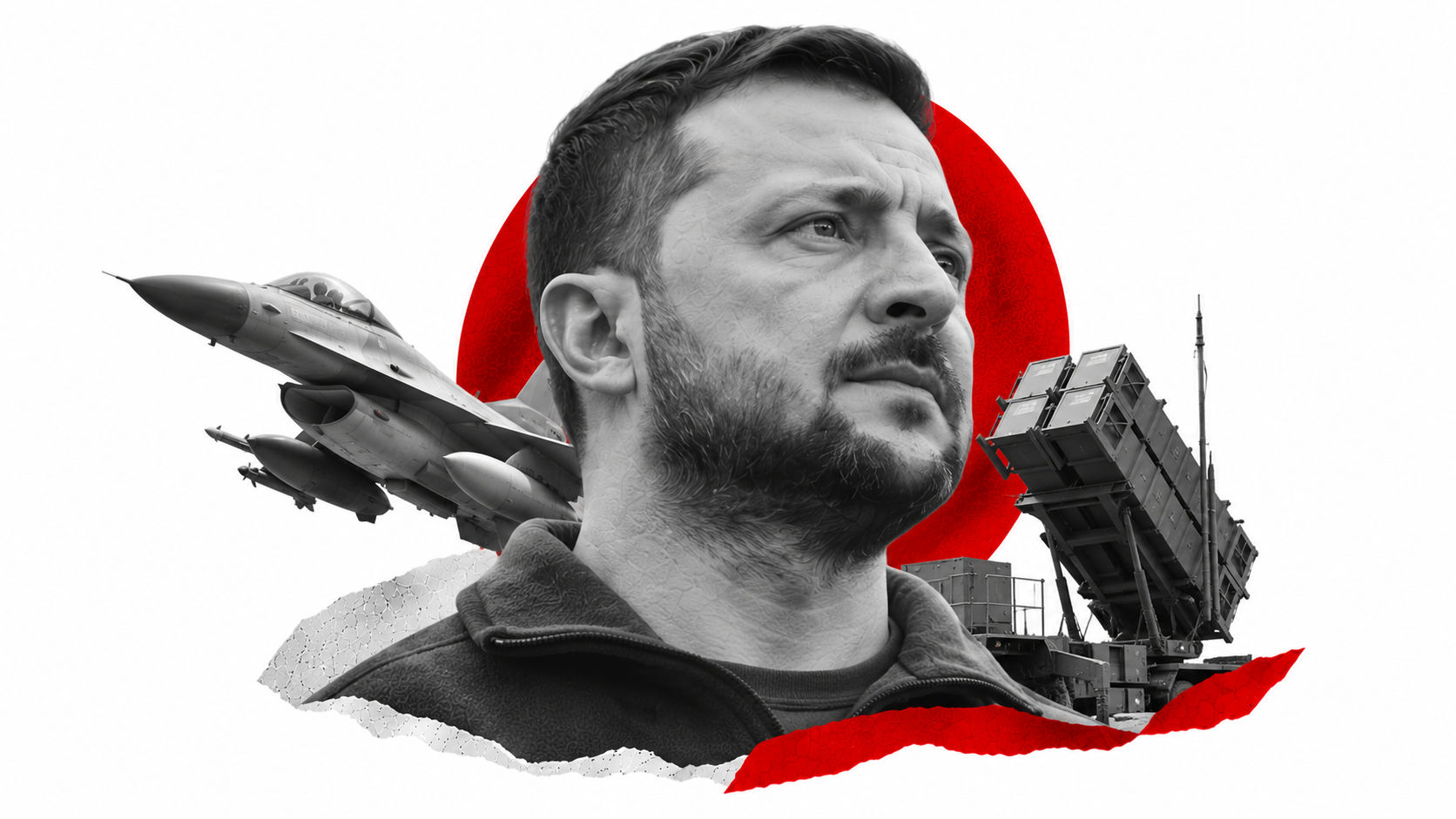
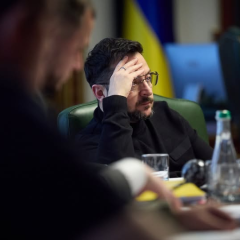
Ukraine is asking partners not for new promises, but for money, planes and missiles that can be used today. At the meeting of the Ukrainian Defense Contact Group in the format of ‘Ramstein’, Volodymyr Zelensky outlined three urgent needs: €8 billion in additional funding, 40 F-16 fighters, and interceptor missiles from the existing arsenals of allies. Behind these numbers lies an increasingly acute contradiction between the pace of war and the speed of Western military assistance.
In a war of attrition, time gradually turns into a resource that cannot be compensated for even with large financial packages. A missile that arrives in six months will not be able to intercept a ballistic target today. A fighter jet delivered without the necessary technical support does not guarantee additional combat sorties. And the billions of euros agreed for the next budget year do not cover the current needs of the army.
It is this logic that defines Ukrainian requests at the next meeting of the Ukrainian Defense Contact Group in Brussels.
According to reports of President Volodymyr Zelensky’s speech, Kyiv has outlined three priorities until the end of 2026: an additional €8 billion for military needs, 40 F-16 fighters, and urgent supplies of missiles to the Patriot and IRIS-T systems.
At first glance, this is yet another list of military assistance. In reality, it is an attempt to address three different problems simultaneously: a lack of current funding, limited combat aviation capabilities, and a deficit in air defense means.
Each of these problems has a common feature: Ukraine needs results faster than the usual mechanisms of Western procurement and budget planning operate.
Eight billion that cannot wait until spring
The first request concerns funding.
According to estimates, Ukraine needs an additional approximately €8 billion by the end of the year. This need is related to the gap between previously announced international obligations and the funds that can actually be used for defense.
The problem is that political declarations, budget allocations, and actual payments are three different stages of funding.
States can agree on multi-year aid programs, but their implementation depends on national budgets, parliamentary procedures, defense contracts, and production schedules.
For Ukraine, this system creates a constant risk of cash gaps.
Military expenditures must be made continuously: to pay for ammunition production, to purchase equipment, to support repair capacities, and to finance defense programs.
Instead, international aid often comes in separate tranches.
Additional complexity arises from the distinction between civilian and military funding. New European macro-financial initiatives, including the discussed packages for 2027, may support the Ukrainian budget but do not necessarily provide direct coverage for all defense needs.
Therefore, even massive civilian assistance does not eliminate the need to separately find funds for military purchases.
One of the potential tools is the European SAFE program aimed at supporting defense investments and joint procurement. However, its mechanism is not identical to a direct transfer of funds to the Ukrainian military budget.
Utilizing this instrument requires appropriate agreements, contracts, and participation of European states.
The main financial problem of Ukraine lies not only in the amount of promised aid but also in the speed with which these promises turn into weapons and available resources.
Forty F-16s: why the number of planes does not equal the number of combat-ready machines
The second request-40 additional F-16 fighters-reflects not only the need to increase the aviation fleet.
Modern combat aviation is a complex system, whose effectiveness depends on technical maintenance, personnel training, spare parts, armaments, and the condition of airfield infrastructure.
Each fighter requires regular checks, repairs, and maintenance according to established regulations. Intensive operation increases the burden on technical services and logistics.
Therefore, the number of planes transferred to Ukraine does not necessarily correspond to the number of machines ready for immediate combat missions.
At the same time, the assertion that a significant part of the Ukrainian F-16 fleet is constantly in hangars due to repairs requires confirmation. Actual indicators of military aviation readiness are not fully disclosed for security reasons.
However, the issue of technical readiness is fundamental.
Ukraine needs not only additional fighters but also a sufficient number of trained pilots, technicians, spare engines, components, and air-to-air missiles.
In this context, the request for 40 F-16s can be seen as an attempt to simultaneously increase overall aviation potential and create a reserve to maintain combat activity.
At the same time, Kyiv is considering options for expanding the aviation fleet by acquiring other Western platforms.
Swedish Gripens, French Mirages, and prospective agreements on Rafales could provide additional capabilities, but each new type of aircraft creates separate requirements for training, maintenance, and logistics.
Diversity in the aviation fleet enhances flexibility but also increases the complexity of its operation.
For Ukraine, the main question is not how many fighters will be formally transferred, but how many of them will be able to regularly perform combat tasks.
Missiles from warehouses: the logic of urgent exchange
The most acute request concerns air defense.
Ukraine needs additional interceptor missiles for American Patriot systems and German IRIS-Ts.
Unlike many other categories of military equipment, the shortage of such missiles directly affects the capability to protect cities, energy infrastructure, and military facilities from aerial attacks.
Producing modern surface-to-air missiles requires complex technological processes, specialized components, and long production cycles.
Even with funding, new orders cannot be fulfilled immediately.
This is precisely why the Ukrainian side proposes to change the sequence of deliveries.
Instead of waiting for new factory batches, Kyiv seeks to receive missiles from existing stocks of allies right now, while future production supplies would be used to replenish their arsenals.
This scheme would reduce the time between decision-making and the actual arrival of weapons.
However, it has obvious limitations.
European states and the USA hold their own missile reserves to fulfill national defense tasks and allied commitments. Transferring a significant portion of these stocks to Ukraine may temporarily diminish their readiness for other crises.
Moreover, future production supplies must be guaranteed by the relevant contracts and funding.
But from the Ukrainian perspective, this mechanism has an important advantage: it shifts part of the waiting risk from the state, which is under daily attacks, to allies whose territories do not experience similar intensity of assaults.
«Missiles are needed in the sky, not in warehouses»-this thesis most accurately conveys the logic of the Ukrainian request.
Four interceptions out of 36: what the shortage of air defense shows
The scale of the problem is especially noticeable during massive Russian strikes.
According to reports, during one attack involving 36 ballistic missiles, Ukrainian forces managed to intercept only four.
These figures require verification with the official report of the Ukrainian Air Forces regarding the specific attack.
At the same time, even confirming this ratio would not automatically explain the result solely by a shortage of missiles.
The effectiveness of air defense depends on the type of targets, flight trajectories, attack geography, location of complexes, technical characteristics of interceptors, and the available quantity of ammunition.
However, the shortage of interceptors remains one of the most dangerous limitations.
Particularly concerning are ballistic missiles, against which Ukraine has a significantly narrower set of effective defense means than against conventional drones.
Additional difficulties arise from the limited capabilities of the European defense industry.
Reports of problems with available stocks of Franco-Italian Aster missiles, which are used in SAMP/T systems, demonstrate a broader challenge: European production capacities do not always meet the consumption rates of high-tech munitions during prolonged warfare.
At the same time, information about a possible pause in Italian supplies does not automatically mean a complete cessation of the entire aid program. Such decisions depend on national stocks, production, and specific agreements.
For Ukraine, this means the necessity to simultaneously obtain available missiles and stimulate the expansion of future production.
Why time has become Kyiv's main resource
The next ‘Ramstein’ meeting takes place against the backdrop of intensified international diplomacy.
Contacts between European states within the ‘Coalition of the Willing’ are planned for November 19, and negotiations involving leading world leaders are also being discussed.
In such a situation, the Ukrainian leadership has grounds to seek maximum clarity regarding military assistance before potential changes in the diplomatic process.
However, the assertion that negotiations will automatically lead to a freeze on new supplies would be premature.
International partners may continue military support even during negotiations to end the war. Moreover, maintaining Ukraine's defense capability may be regarded as one of the factors strengthening its negotiating positions.
At the same time, diplomatic uncertainty complicates long-term planning.
Ally governments must consider not only Ukraine's current needs but also potential scenarios for the development of negotiations, their own defense budgets, and political risks.
That is why Kyiv seeks to obtain concrete decisions sooner rather than later, before international discussions change the partners' priorities.
Ukraine is trying to turn political support from allies into military resources before diplomatic uncertainty starts to affect the pace of new decisions.
Europe caught between its own security and Ukrainian needs
Ukrainian requests demonstrate a fundamental contradiction faced by European states.
On one hand, supporting Ukraine's defense capability is seen as an important element of European security.
On the other hand, transferring weapons from existing stocks can create temporary gaps in allies’ own defense capabilities.
This dilemma is particularly acute in the sphere of air defense, where production cycles are long, and the number of available systems and missiles is limited.
European governments must simultaneously provide support to Ukraine, replenish their own arsenals, and fund the expansion of defense industry.
Therefore, Kyiv's proposal for exchanging current stocks for future factory supplies is not only a military but also a politico-economic solution.
It essentially offers allies to change the distribution of risks over time.
Ukraine gets the opportunity to defend itself immediately, while partners agree to temporarily reduce part of their reserves in exchange for their subsequent replenishment.
For implementing such a model, trust in production schedules, stable funding, and willingness from governments to take on relevant commitments are needed.
War does not wait for budget procedures
Zelensky's three requests reflect three different time horizons.
€8 billion is needed to meet current military needs. Additional F-16s are for increasing aviation potential and maintaining its combat readiness. Missiles for Patriot and IRIS-T are for protecting against attacks that may occur as soon as tonight.
United by a common problem: the pace of modern warfare outstrips traditional mechanisms for making defense decisions.
European budgets are planned for years. Producing complex weaponry requires months. Political agreements may drag due to internal contradictions among allies.
In contrast, military needs arise daily.
That is why the current ‘Ramstein’ can be seen as an attempt to change not only the volumes of aid but also the principle of its provision.
Ukraine proposes that allies shift from the logic of future commitments to the logic of immediate utilization of existing resources.
This does not negate the need for long-term funding and production expansion. On the contrary, without them, current stocks cannot be consistently replenished.
But for a state that faces missile and drone attacks daily, a long-term strategy cannot substitute urgent decisions.
The key question for Ukraine's allies today is not only how much weaponry they are willing to transfer but also how much of their own resources they are ready to provide immediately.
Here lies the line between political solidarity and practical military support.
And if Western partners seek to preserve Ukraine's defense capability regardless of the outcomes of future negotiations, the speed of decision-making may prove to be as important as the overall sum of announced aid packages.

Read also