Lead Coffin of 17th-Century Croatian Statesman Ivan Zakmardi Unearthed in Zagreb

Discovery of Ivan Zakmardi's Remains
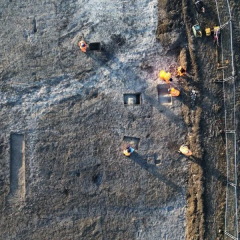
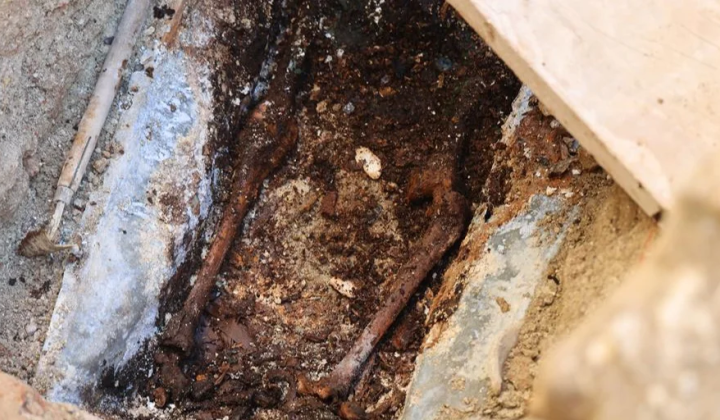
According to НВ — Техно: During restoration work on Zagreb Cathedral in Croatia following the 2020 earthquake, archaeologists uncovered a lead coffin containing the remains of Ivan Zakmardi, an influential Croatian statesman from the 17th century. Alongside the coffin, researchers found an iron vessel believed to be a heart urn (cardiotaph) and various funerary items that reflect Zakmardi’s high status and life.
Born around 1600, Ivan Zakmardi passed away on April 25, 1667, in Banská Bystrica, located in present-day Slovakia. On November 20, researcher Ana Azinović Bebek announced that archival documents, historical records, and scientific analysis combined to provide 99% certainty that the remains belong to Zakmardi. Excavations also revealed evidence of post-mortem surgical procedures, suggesting internal organs were removed to slow decomposition during transport. Anthropological studies determined that the deceased was a man over 65 years old, affected by diffuse idiopathic skeletal hyperostosis (DISH) and mobility-impairing conditions. Cranial lesions resembling metastatic cancer require further investigation, but no signs of violent death were found on the skeleton.
Artifacts and Their Historical Importance
The coffin contained several notable items:
- Leather shoes adorned with silver buckles;
- A gilded cross;
- Religious artifacts;
- Remnants of burial garments.
Textile examination indicates Zakmardi was likely buried wearing clothing made from silk, wool, and metallic threads. A prominent jurist and royal prothonotary, Zakmardi also represented the Kingdom of Croatia. In 1643, he compiled legal documents and privileges into a wooden chest known as the Cista Privilegiorum Regni, which laid the foundation for the Croatian State Archives. The chapel of St. John the Baptist, commissioned by Zakmardi as his burial place, suffered partial destruction in the 1880 earthquake and remains unrestored.
In an additional 2026 archaeological find, a late antique stone sarcophagus of Salona type dating from the 4th to 6th centuries AD was discovered in the Roman necropolis of Epidaurum (modern-day Cavtat). Weighing five tons and buried three meters underground, the intact sarcophagus was sealed with lime mortar and showed no signs of disturbance. Salona was the capital of the Roman province of Dalmatia, highlighting the significance of this discovery for understanding the region's cultural heritage.
The excavation of Ivan Zakmardi’s remains and associated burial objects offers valuable insights into Croatian history, underscoring his key role in shaping the nation's legal framework and governance. These findings also demonstrate the critical role of archaeology in uncovering and preserving cultural legacies for future generations.

Read also