ASTRA Robotic System Demonstrates Autonomous Assembly of Antenna Farm Segment in Low Earth Orbit

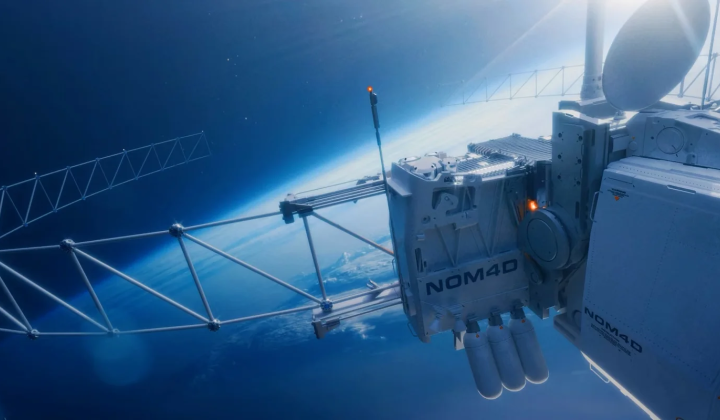
ASTRA Robotic Assembly System
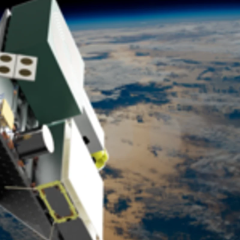
According to НВ — Техно: Developed by the California Institute of Technology (Caltech), the ASTRA robotic system successfully assembled the third segment of a reflector antenna array in low Earth orbit. Launched on March 30, 2026, aboard SpaceX's Transporter-16 mission, ASTRA operates under the U.S. Defense Advanced Research Projects Agency's (DARPA) NOM4D program. The antenna, designed to have a 1.4-meter diameter and consist of 11 sections, could not be fully completed by the mission's scheduled end in December 2026.
Engineering and Operation Details
ASTRA, short for Autonomous In-Space Tensioned Reflector Assembly, measures about one cubic meter. It began with two pre-assembled sections on board, while its manipulator arm constructs additional segments using composite rods and aluminum connectors. Once formed, the system attaches a perforated Kapton reflective film, developed through a collaboration between Caltech and the University of Pennsylvania. This film requires less tension than traditional metal meshes, reducing overall structural weight.
Communication with ASTRA occurs seven to eight times daily, each session lasting roughly 15 minutes. Operators adjusted the system's actions based on orbital imagery, validating commands on a backup ASTRA unit housed in Caltech’s Pellegrino Laboratory. The NOM4D program aims to enable in-space construction of massive structures spanning hundreds of meters to kilometers, including telescopes, antennas, communication networks, and solar arrays.
Advancements like ASTRA have the potential to revolutionize space construction, particularly for communication and Earth observation infrastructure. The components assembled could serve as foundational elements for large-scale orbital installations, supporting expanded scientific research and enhanced space-based capabilities. Successfully demonstrating the NOM4D technology paves the way for humanity’s deeper exploration and utilization of space, addressing evolving technological demands and expanding our presence beyond Earth.
The advancements in autonomous systems for space assembly, such as the ASTRA project, highlight the potential for innovative missions beyond Earth. For instance, the UAE is set to embark on a significant journey to the asteroid belt, aiming for a landing on 269 Justitia in 2036. This mission underscores the growing interest in utilizing robotic technologies for exploration and resource acquisition in space. To learn more about this ambitious venture, read about the UAE's plans to explore the asteroid belt.

Read also