War-Driven Debt Servicing Could Consume 15% of Russia’s GDP

Russia’s Financial Strain
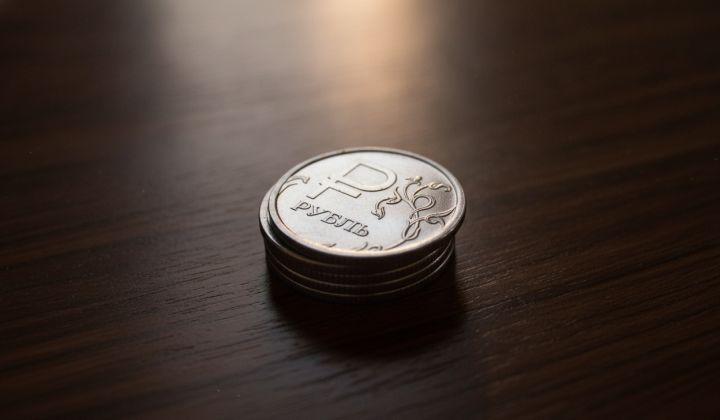
According to ХВИЛЯ: Moscow’s budget is under severe pressure from the ongoing war, forcing the Kremlin to plug its deficit through domestic borrowing. According to Bloomberg Economics, Russia will spend at least 15% of its gross domestic product on debt servicing over the next decade-an amount roughly equal to the country’s entire current public debt. Meanwhile, foreign funding sources are almost entirely blocked by sanctions, leaving the government with limited options to manage its finances.
Defense Spending and Debt Obligations
In 2026, defense expenditures may exceed the planned 4–5 trillion rubles (about $55–69 billion), representing a nearly 40% overshoot of the defense budget target. The budget deficit for the first five months of 2026 reached 6 trillion rubles, or 2.6% of GDP, which is 60% above the annual target. The ceiling on state debt-set at 37.4 trillion rubles-has been fully exhausted, and the Finance Ministry is attempting to narrow the deficit by tapping reserves and cutting other spending.
Forecasts indicate that by the end of 2026, the state will need to borrow an additional 2–3 trillion rubles. The cost of debt servicing has doubled since the full-scale invasion began in February 2022. In 2021, debt payments consumed about 4.5% of budget expenditures; by 2026, that figure has risen to nearly 9% (4 trillion rubles). Debt servicing has become the fifth-largest budget item, trailing only defense, national security, social policy, and the economy.
At the St. Petersburg Economic Forum in June 2026, Vladimir Putin compared Russia’s public debt-16.5% of GDP-to that of other nations, such as Greece (146%), Italy (137%), and France (116%). Recently, State Duma deputies passed a law allowing the government to borrow beyond the budget’s established ceiling.
This bill is urgently needed, noted Andrey Makarov.
Russia’s central bank has raised its key rate to a record high, while yields on long-term government bonds remain around 15%-double the levels seen in 2017–2019. The country’s external debt is shrinking as sanctions cut it off from international capital markets. To ramp up borrowing, the central bank and state-owned banks are using repurchase agreements (repos). Meanwhile, banks are funneling money into government securities instead of lending to the real economy, which hampers the development of non-military sectors.
At current rates, domestic debt is quite expensive, noted Dmitry Polevoy. At some point, this will have to stop. Otherwise, the eventual cost of winding it down could be very high, added Oleg Vyugin.
These financial difficulties underscore the severe consequences of economic sanctions and the growing budget deficit driven by military spending. The measures being taken to reduce the deficit-such as cutting expenditures and increasing domestic borrowing-could have long-lasting negative effects on both the economy and the social sphere in the country. The future trajectory will depend on the government’s ability to adapt to new conditions and strike a balance between military needs and the socio-economic well-being of the population.
As the Kremlin grapples with soaring defense expenditures and mounting debt obligations, recent warnings from the finance ministry and central bank highlight the potential risks associated with escalating military spending. For a deeper understanding of these financial pressures and their implications for Russia's economy, see how officials are urging caution regarding budgetary decisions in the face of ongoing conflict. Read more about this critical issue here.

Read also