Russian Forces Turn Kherson Region Polling Stations into History-Themed Venues Amid Sham Elections

Fake Elections Held in Russian-Occupied Parts of Kherson Region
According to Рубрика — Суспільство: In the areas of Kherson region under Russian occupation, polling stations for the illegitimate elections to the Russian State Duma have been transformed into historically themed venues. The main voting period takes place from September 18 to 20, 2026, preceded by a 10-day early voting phase. This thematic makeover has been branded as a 'historical journey.'
How Polling Stations Were Decorated
At least four polling stations across the region have been styled to reflect different historical eras. For example:
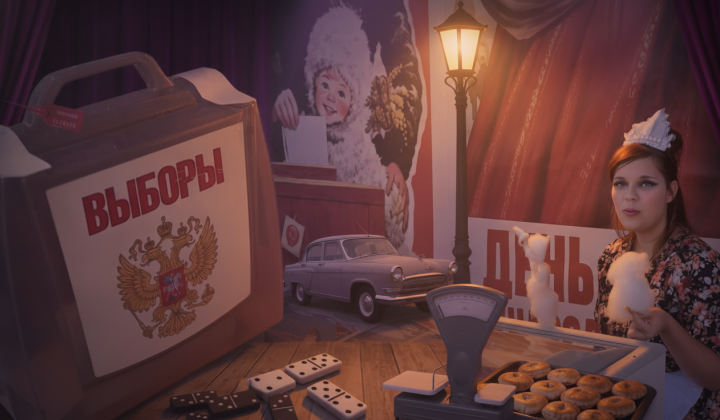
- One station in Henichesk recreated the 1960s atmosphere, offering voters Soviet-era lemonades and pastries made according to GOST standards, playing Soviet songs, organizing domino games, and featuring hats from that period. Nearby, photos of the Kakhovka Hydroelectric Power Plant-destroyed by Russian troops-were displayed.
- In Kalanchak, voters were greeted by actors portraying Catherine the Great and Admiral Fyodor Ushakov.
- The Chaplynka station was styled after the 1906 elections to the first State Duma of the Russian Empire.
- In Novotroitske, the setting evoked the first postwar Soviet elections from 1945–1947, with staff dressed in Soviet military uniforms.
Notably, the Novotroitske polling station was named in honor of Kirill Stremousov, a deceased collaborator.
The occupation-appointed "governor" Vladimir Saldo voted at the Novotroitske station, afterward enjoying dominoes and pastries. Participants in these illegal elections receive incentives such as headphones, phone cases, and notebooks. These September 18–20, 2026 elections mark Russia's first parliamentary vote since the full-scale invasion of Ukraine began. Official projections expect the Kremlin-backed party "United Russia" to secure a constitutional majority, winning over 300 seats out of 450.
Other parties on the ballot, including the Communist Party (KPRF), Liberal Democratic Party (LDPR), and "New People," are considered systemic and loyal to the Kremlin. In 2023, Russian President Vladimir Putin signed amendments to the martial law legislation allowing elections to be held in temporarily occupied Ukrainian territories. The head of Russia's Central Election Commission, Ella Pamfilova, stated that elections could be postponed if conditions worsen in these regions.
“On temporarily occupied territories of Ukraine, the Russian Central Election Commission may delay 'elections' if the situation deteriorates there.” - Ella Pamfilova
These sham elections on occupied territories highlight Russia's efforts to legitimize its control over regions embroiled in ongoing conflict. The use of historical themes at polling stations appears aimed at stirring nostalgia among voters and boosting turnout. This strategy also reflects the Kremlin’s broader information management tactics, attempting to project an image of normalcy in the contested zones.
As Russia prepares for its parliamentary elections amid significant international scrutiny, concerns are mounting regarding potential provocations. Recent intelligence reports suggest that these false-flag operations could coincide with the voting period, raising alarms about the legitimacy and safety of the electoral process in occupied regions.

Read also