Russia’s ‘Skyfall’ Missile: A Radioactive and Useless Weapon

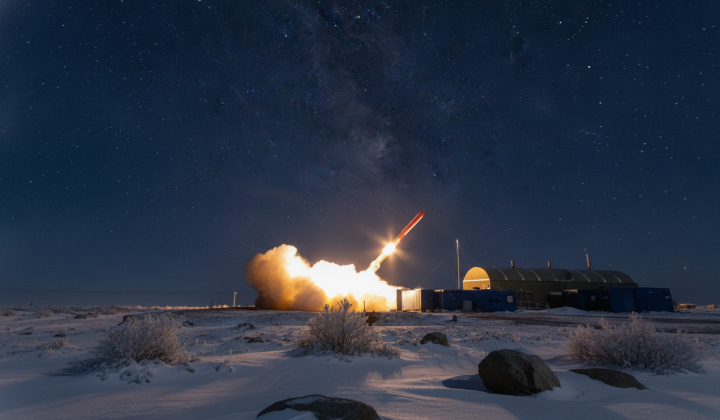
The Nuclear-Powered Cruise Missile Known as ‘Burevestnik’
According to ХВИЛЯ: Russia’s nuclear-powered cruise missile, designated ‘Burevestnik’ and referred to as Skyfall by NATO, is the first aircraft ever to achieve flight using nuclear propulsion. Researchers at the Massachusetts Institute of Technology (MIT) have concluded that the missile operates with a direct-cycle nuclear engine, which releases radioactive exhaust and poses serious environmental risks. They also noted that the weapon is both hazardous and easily intercepted by modern defense systems.
Maiden Flight and Technical Analysis
The ‘Burevestnik’ completed its first flight last October, launching from a Russian island situated beyond the Arctic Circle. During the mission, it traveled northeast and spent several hours circling over a remote, frozen, and uninhabited area. The missile is powered by a compact nuclear reactor that sustains its propulsion.
MIT professor Jake Hecla, who led the analysis alongside co-author R. Scott Kemp, examined video footage published by Russian media to study the ‘Burevestnik.’ By comparing the missile’s dimensions to objects of known size, such as a table or fire extinguisher, Hecla calculated its overall scale and built a model of its reactor.
The MIT scientists believe the missile likely employs a direct-cycle nuclear engine that pulls air directly through the nuclear fuel, probably coupled with a turbojet system. This design releases radioactive isotopes of argon, krypton, and carbon into the atmosphere.
‘A direct cycle very likely results in a large amount of radioactive material in the exhaust.’ - Jake Hecla
Jeffrey Lewis, an expert from the Middlebury Institute, described the missile as ‘practically useless’ and called it an ‘environmental nightmare.’
It is worth noting that in 2019, an explosion off Russia’s coast killed several Russian nuclear specialists and triggered a spike in radiation levels. This incident is believed to have occurred during an attempt to recover a prototype of the ‘Burevestnik’ reactor from the seabed. While Russia claims the missile will only carry a nuclear warhead, scientific analysis raises serious concerns about the safety and environmental consequences of deploying such technology.
The development and testing of the ‘Burevestnik’ missile represent a new phase in Russian military technology, drawing international concern. Using nuclear propulsion for cruise missiles threatens not only the environment but also the security of regions where these weapons might be stationed. This situation highlights the urgent need for global dialogue and stricter controls on nuclear technologies to prevent potential disasters and the escalation of conflicts.
In a related development, Russia has shifted its strategy by concealing ballistic missiles underwater instead of relying solely on nuclear submarines. This decision highlights the evolving nature of Russia's military capabilities and raises concerns about the potential environmental impact of its weapons systems, including the recently analyzed 'Burevestnik'.

Read also