Star Birth in Andromeda Has Slowed Sharply, According to New Hubble Data

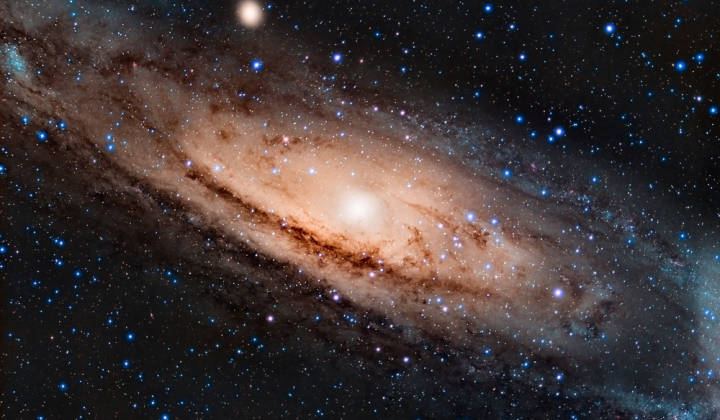
What's Behind the Slowdown of Star Formation in the Andromeda Galaxy?
According to Radiotrek — Світ: Subheading: Hubble telescope spots puzzling changes in our nearest major galactic neighbor
Published: Friday, July 31, 2026 22:40
Source: Radio Track: News
External source: Daily Galaxy
Over the past 500 million years, star formation in the Andromeda galaxy has been winding down, according to observations from the Hubble Space Telescope. The slowdown became especially pronounced in the last 40 million years, with the rate dropping from roughly one solar mass per year to just one-fifth of a solar mass per year.
Where the Slowdown Is Most Visible
The sharpest decline has been measured in a ring about 32,000 light-years from the galaxy's center. Researchers suspect the companion galaxy M32 may be responsible. Near M32, they found zones where star formation has slowed even more dramatically than elsewhere in Andromeda.
Located around 2.5 million light-years from Earth, Andromeda is the nearest large galaxy to our own. The research team plans to continue mining Hubble's archive and to use newer space telescopes for further study of star formation there.
This slowdown could reshape how astronomers understand galaxy evolution, since Andromeda offers the closest large-scale example of how such systems develop. Studying it may also reveal how interactions with satellite galaxies influence star birth and shape the long-term growth of galactic structures.
As researchers delve deeper into the complexities of star formation, understanding the interactions between galaxies becomes crucial. For instance, the recent detection of supernovae during the merger of butterfly galaxies sheds light on how such cosmic events can influence star birth rates and galactic evolution. This connection may provide further insights into the ongoing changes within Andromeda.

Read also