How a Near-Miss on Ukraine's Presidential Office Led to Russia's Starlink Access Being Cut

Drone Incident Over Kyiv
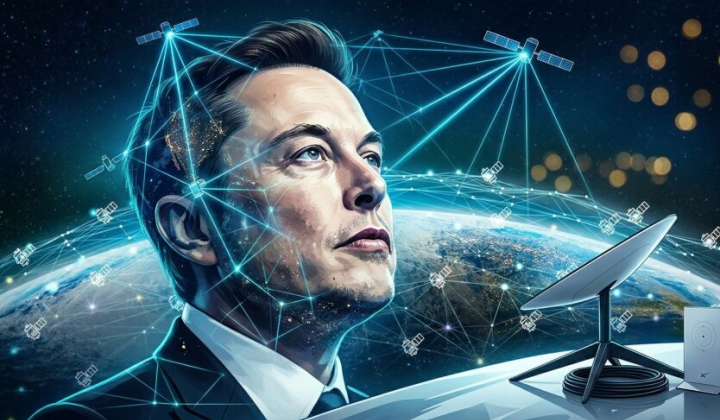
According to ХВИЛЯ: In January 2023, a Russian BM-35 attack drone penetrated the airspace over Kyiv's government district, coming dangerously close to striking the Ukrainian President's Office. The drone ultimately crashed into a building, causing no casualties. This event triggered a decisive move to block Russian occupiers from accessing the Starlink satellite network. Ukraine's Minister of Digital Transformation, Mykhailo Fedorov, presented Elon Musk with evidence that Russian forces were using Starlink terminals to control their drones. Starlink, operated by SpaceX, has become a critical communications backbone in the conflict, used for both civilian and military purposes.
SpaceX responded swiftly to the incident. By the end of January, the company had created a 'whitelist' of authorized Ukrainian users through software updates implemented in a single day. Following these new protocols, Starlink terminals began losing connection when used on drones traveling faster than 80 km/h. This countermeasure was crucial, as a previous Ukrainian Security Service (SBU) attack on Russia's Black Sea Fleet in 2022 had been thwarted when maritime drones lost their Starlink connection roughly 40 miles from Sevastopol. SBU General Ivan Lukashchevych, who commanded that operation from an underground bunker in Kyiv, confirmed the details.
Strategic Dependence on a Commercial System
Simultaneously, Ukrainian hackers from the '256th Cyber Offensive Division' set up a fake registration system, enabling them to identify the locations of over 2,400 enemy Starlink terminals. Russian military correspondent Alexander Kots noted that Starlink has become a critical vulnerability, calling it the 'Achilles' heel of the Russian army.'
"Unfortunately, we will not receive a proper replacement for this system any time soon," - Alexander Kots
Rheinmetall CEO Armin Papperger also expressed concern over this strategic reliance on a single commercial provider.
"Do we want to depend on Elon Musk? No. If he turns off his satellites, if he shuts down the connection-we have a problem. This is a strategic necessity," - Armin Papperger
General Ivan Lukashchevych confirmed that drone operations were successfully halted by the new protocols but also remarked that "Musk decided to do a little work for Putin. He saved the Russian fleet."
Consequently, control over Starlink access remains a critically important factor for both sides of the conflict, directly impacting security and the effectiveness of military operations. Ukraine's successful blocking of Russian access demonstrates how a single technological solution can influence the course of the war. At the same time, the Russian military's dependence on Starlink raises serious questions about its strategic capabilities in a modern combat environment where commercial technology plays a decisive role.

Read also