Why Russian Content Occasionally Surfaces on Ukrainian Streaming Platforms Despite Regional Restrictions

The Challenge of Russian Media on Ukrainian Digital Services
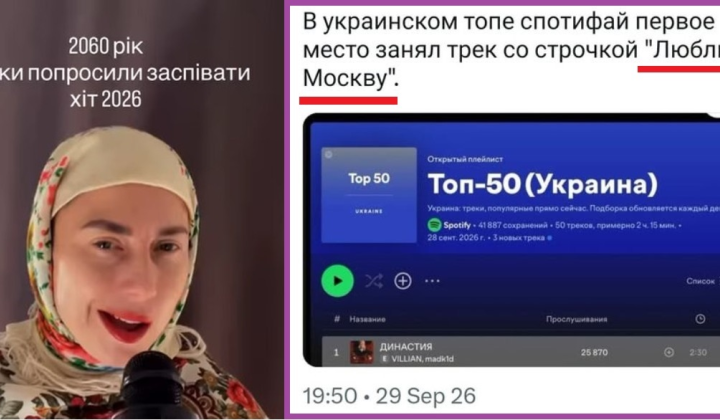
According to Radiotrek — Світ: Users in Ukraine sometimes encounter Russian-language content on streaming platforms, even though such content is blocked in neighboring countries like Poland, the Czech Republic, and Spain. This occurrence stems from the way recommendation algorithms operate on services including Spotify, Facebook Reels, and Google Search, combined with regional variations in user behavior data. These platforms’ algorithms rely on fallback playlists and statistical links between different content types, inadvertently exposing Ukrainian listeners to Russian-language media.
Data shows that while Polish users receive fallback content limited to Polish or English, Ukrainian listeners are served from a broader Cyrillic-language pool. Since both Ukrainian and Russian share the Cyrillic alphabet, natural language processing models cluster their content vectors closely. This overlap, alongside a history of Ukrainian accounts consuming both Ukrainian and Russian media, creates statistical associations that cause Russian content to appear in Ukrainian recommendations.
How Algorithms Shape Media Consumption Patterns
When apps freeze or crash, local playback queues are cleared. Upon restarting, media players switch to emergency protocols by defaulting to top global or regional charts or popular promotional playlists. Yuri Pylypenko explains that "to prevent an empty player after a restart, the service employs fallback scenarios." The background system automatically triggers play commands to resume audio.
Spotify’s autoplay algorithms are designed to maximize user engagement. As Pylypenko points out, "Streaming platforms like Spotify use fallback algorithms that force playback and push content without explicit user consent." Viral tracks with rapidly growing view counts spill over into adjacent language and demographic groups. If a song surges in popularity in a neighboring country, the algorithm interprets it as having an exceptionally high viral coefficient and boosts it across related accounts and regions.
Therefore, the presence of Russian content on Ukrainian platforms is not only a consequence of algorithmic processes but also reflects the historical media consumption patterns in Ukraine.
This situation highlights the need for streaming services to tailor their algorithms more precisely to regional and cultural contexts. Given Ukraine’s unique historical and cultural relationship with Russian-language media, current recommendation systems may overlook important nuances. Platforms must consider these factors to provide users with a more relevant experience and prevent unwanted content from being imposed.

Read also