Hungarian Foreign Minister Aided Russian Efforts to Undermine EU Sanctions, Investigation Reveals

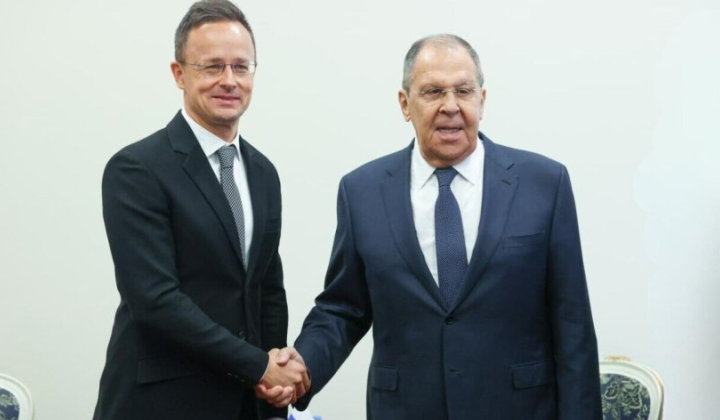
Probe into Hungarian Foreign Minister's Contacts
According to ХВИЛЯ: An investigation by The Insider and other media outlets has uncovered evidence that Hungarian Foreign Minister Péter Szijjártó engaged with Russian officials in attempts to sabotage European Union sanctions. This collaborative investigation, conducted by The Insider, Frontstory, VSquare, Delfi Estonia, and ICJK, has brought to light significant facts suggesting efforts to lift sanctions from specific individuals and companies linked to Russia. This comes at a time of heightened scrutiny over the unity of the EU's foreign policy towards Moscow.
Key Findings of the Investigation
In late August 2024, Russian Foreign Minister Sergey Lavrov called Péter Szijjártó. During the conversation, Lavrov requested the removal of EU sanctions on Gulbahor Ismailova, the sister of businessman Alisher Usmanov. Hungary and Slovakia reportedly planned to submit a joint request on this matter, and by spring 2025, sanctions against Ismailova were indeed lifted.
Furthermore, Szijjártó shared confidential details of a meeting of European diplomats with Lavrov, an act that potentially breaches diplomatic protocol. In the summer of 2025, another conversation occurred between Szijjártó and Russian Deputy Energy Minister Pavel Sorokin. In this discussion, Szijjártó asked Sorokin for arguments to defend the company 2Rivers, which was under threat of sanctions.
A crucial part of the investigation reveals that Szijjártó claimed to have excluded 72 organizations from a proposed list of 128 for sanctions. The minister also promised to review lists of Russian banks to avoid restrictions, a process that resulted in the Bank of Saint Petersburg escaping sanctions. Despite Szijjártó's efforts, the EU's 18th sanctions package, adopted in July 2025, ultimately included the company 2Rivers.
As Ukrainian President Volodymyr Zelenskyy has noted, the overall situation remains complex. The investigation raises serious questions about transparency and ethics in relations between Hungary and Russia, requiring further analysis and attention from the international community.
This situation could have significant repercussions for political relations between Hungary and other EU member states, as it undermines the principles of unity and solidarity regarding sanctions against Russia. The findings point to a potential threat to international security, which may prompt increased scrutiny of EU members' actions and their interactions with sanctioned countries. It is also likely to fuel new political debates and potential shifts in the EU's sanctions strategy.
The investigation into Péter Szijjártó's actions raises significant questions about Hungary's stance on EU sanctions. This is particularly relevant in light of Hungary's recent calls for the EU to reconsider its sanctions on Russian oil and gas. For more details on Hungary's push for lifting these sanctions, see Hungary's appeal to the EU regarding Russian energy sanctions.

Read also