Executed in Babyn Yar: The Story of Ukrainian Poet Olena Teliha

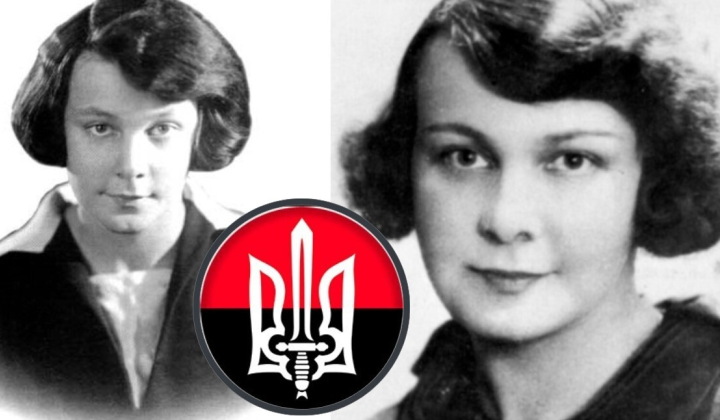
Life and Work of Olena Teliha
According to Radiotrek — Світ: Olena Teliha, a legendary Ukrainian poet and activist of the Organization of Ukrainian Nationalists (OUN), was born on July 21, 1906, in Ilyinskoye, Moscow Governorate. Her father, Ivan Shovheniv, worked as a hydraulic engineer, while her mother hailed from the Podillia region. The family spoke Russian at home, and Olena learned French and German but did not know Ukrainian. Before 1917, her father became a professor at Kyiv Polytechnic and later served as a minister in the government of the Ukrainian People's Republic. Her older brother, Serhiy, fought in the army of the Ukrainian People's Republic.
In the spring of 1922, the family emigrated to Czechoslovakia, settling in Poděbrady. Olena married Mykhailo Teliha, an officer of the Ukrainian People's Republic's army from Kuban. In July 1941, she crossed the San River near Yaroslav as part of an OUN expeditionary group alongside Ulas Samchuk. On September 22, 1941, Teliha traveled to Rivne, and on October 22, she arrived in Kyiv.
On February 9, 1942, Olena Teliha was arrested by the Gestapo at the premises of the Union of Ukrainian Writers. Mykhailo Teliha was arrested along with her. She was executed in Babyn Yar in the latter part of February 1942, widely believed to be on February 22. The poet lived 36 years and authored 38 poems.
Influence and Legacy
Many researchers of Olena Teliha's life and work, as noted by Bohdan Chervak, struggle to understand how a salon woman raised in a Russian cultural environment came to identify as Ukrainian. Olena Teliha left her mark on literature, famously declaring:
'You boors! That dog's language is my language! The language of my father and my mother. And I no longer want to know you.' - Olena Teliha
Her words about her own fate are strikingly poignant: 'Here sat Olena Teliha, and from here she goes to her execution.' Her life and work remain a vital part of Ukrainian history.
Olena Teliha has become a symbol of the struggle for Ukrainian identity and culture under a repressive political regime. Her literary output and active involvement in the OUN reflect a deep embrace of national identity, despite her upbringing in a Russian-speaking household. Today, her legacy resonates even more strongly amid contemporary challenges in Ukraine, underscoring the importance of preserving cultural heritage and national memory.

Read also