Ensuring Fairness and Growth: The Role of Templates in Annual Employee Reviews

The Value and Benefits of the Annual Employee Review
According to AIHR: In today's competitive business environment, the annual performance review has become a vital tool for structuring employee evaluations within companies. This process establishes consistency, fairness, and objectivity, while simplifying documentation and focusing on staff development. A Gallup study reveals a significant gap, with only 2% of Chief Human Resources Officers (CHROs) strongly agreeing that their performance management system inspires employees to improve, highlighting a clear need for organizations to refine their current practices.
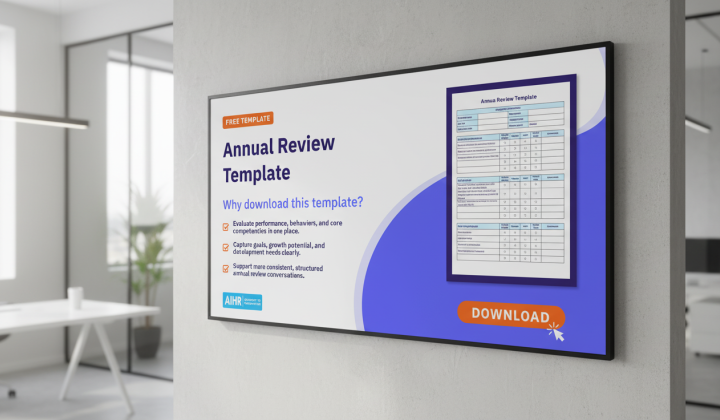
An annual review is a structured assessment of an employee's performance, results, and behavior against the expectations of their role. To assist companies in implementing this process, AIHR offers a free annual review template for download. Utilizing a standardized template for annual reviews provides several key advantages, including:
- establishing consistency across teams;
- supporting fairer evaluations;
- saving time for managers and the HR department;
- improving the quality of feedback;
- strengthening documentation;
- simplifying workforce data analysis;
- building employee trust.
Template Types and Essential Components
Several types of annual review templates exist, such as rating-based templates, goal-oriented (OKR/KPI) templates, competency-based templates, 360-degree feedback templates, and role-specific templates. To ensure the process is effective, it is crucial to include the following elements in the template:
- employee and role information;
- expectations and scope of responsibility;
- goals and outcomes;
- competencies and behavior;
- key achievements;
- challenges and lessons learned;
- manager feedback summary;
- employee self-assessment;
- development plan;
- rating and/or overall evaluation;
- recommendation for reward or promotion (optional);
- goals for the next cycle;
- signatures and final comments.
For the effective use of an annual review template, a 10-step process is recommended:
- define the purpose of the review;
- customize the template;
- prepare managers;
- encourage employee self-assessment;
- gather evidence from the entire period;
- calibrate ratings;
- conduct the discussion;
- create a development plan;
- separate documentation from ongoing support;
- review the process.
These steps will help organizations implement the annual employee review as a powerful instrument for enhancing team performance and fostering professional growth. When done well, structured reviews can boost productivity and aid in talent retention, which are critical factors for a company's long-term success. Given the widespread dissatisfaction with traditional evaluation methods, businesses should consider adopting more structured and transparent approaches to create a more motivating environment for their workforce.
Understanding the nuances of employee evaluation is essential for effective performance management. For HR professionals looking to enhance their assessment techniques, exploring a comprehensive guide on competency assessment can provide valuable insights. This resource outlines practical steps that can be integrated into your annual review process, ensuring a more thorough evaluation of employee skills and contributions.

Read also