Achieving Pay Equity: How Companies Are Closing the Wage Gap

Understanding and Implementing Pay Equity
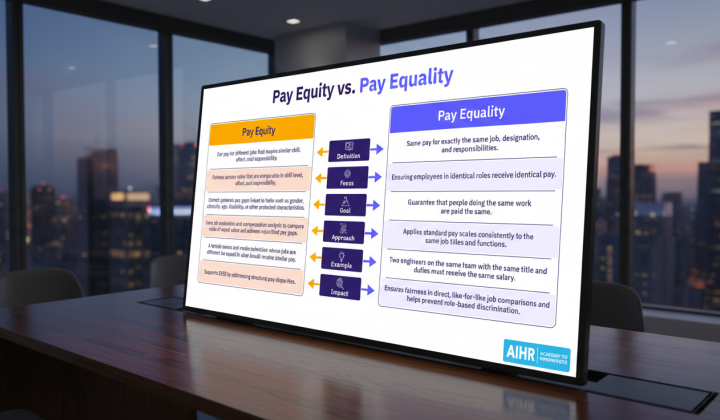
According to AIHR: Pay equity, the principle of equal pay for work of equal value, is a cornerstone of modern labor law and corporate ethics. This concept involves legislative frameworks, company case studies, analysis processes, specialized software, implementation challenges, and best practices. Recent data indicates that 56% of companies now have robust strategies in place to identify and address pay equity gaps. This growing focus reflects a broader societal shift towards fairness and equality in the workplace.
In the United States, the legal foundation for this effort is the federal Equal Pay Act of 1963, which prohibits gender-based pay discrimination across all 50 states and the District of Columbia. This law mandates fairness and provides a framework for addressing wage inequality. For instance, the company Coty reports a gender pay gap of 5% or less across all management categories, with an overall average gap under 4%, demonstrating successful policy implementation.
Corporate Case Studies
Major corporations are leading by example in this area. Since 2009, Starbucks has pursued a goal of achieving 100% gender pay equity for its U.S. workforce. Similarly, Adobe conducts annual reviews to maintain pay parity across its global offices. These initiatives highlight a proactive corporate commitment to creating fair compensation structures.
Consequently, pay equity has become a critical component of corporate social responsibility. Companies that actively work to eliminate pay disparities not only comply with legal standards but also enhance their brand reputation and become more attractive to top talent by fostering a fairer work environment.
The evolution of pay equity practices underscores the increasing importance of equality in the professional sphere. Organizations dedicated to closing wage gaps demonstrate a commitment that goes beyond legal compliance, aiming to build a more inclusive and equitable culture. This commitment can significantly boost a company's public image, aid in recruiting, and improve overall employee satisfaction.

Read also