For Ukrainian students in grades 5-9, diagnostic tests may become the new basis for assessment

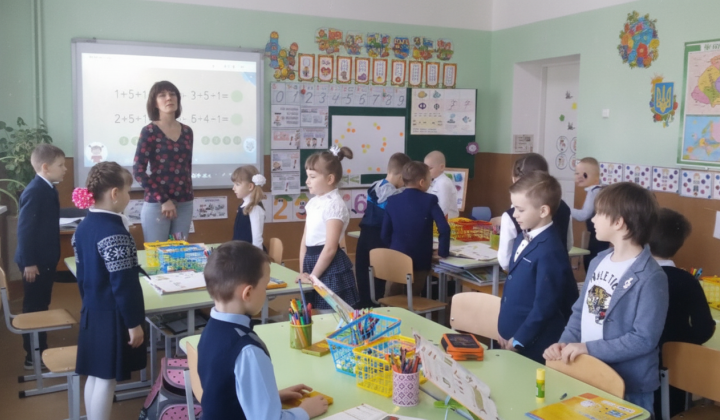
An examination of evaluation under the New Ukrainian School
According to ХВИЛЯ: The Hvylya article focuses on a column by Kateryna Terletska in Dzerkalo Tyzhnia that looks at how grades 5-9 in the New Ukrainian School reform are assessed through result-based categories. Terletska, who holds a doctorate in physics and mathematics and oversees the 'Mathematics for Life' concept within the NUS reform, draws on international educational experience to propose fresh evaluation methods. She views the result-group grading system introduced in grades 5-9 as one of the most important changes in Ukraine's educational system. This debate matters as Ukrainian schools increasingly look to international norms for guidance.
Result groups and lessons from other countries
In mathematics, four outcome groups are planned, running from spotting a problem and building a model to critically reviewing one's own final result. After the Ministry of Education and Science of Ukraine changed its leadership, the discussion around this style of grading became more active, and some voices called for dropping it altogether. In the early 2000s, a Danish commission chaired by Professor Mogens Niss produced the KOM project, which went on to influence curricula in Denmark, Finland, Norway, the Netherlands, and Estonia, as well as the PISA international assessment.
Terletska highlights Niss's point that school goals tend to evolve more quickly than the instruments used to measure them. She also notes that different textbook author teams interpret the result groups in different ways, meaning the same task can appear in one group in one textbook and in another group elsewhere. To address this inconsistency, she suggests:
- creating a national bank of pre-tested tasks with clearly defined result groups;
- shifting group-based grading to national diagnostic tests taken after grades 6 and 9.
Earlier, Hvylya reported on the Education Ministry's revised grading system for students in grades 5-9 and on a controversy in Poland over its new assessment approach.
"What you assess is what you get" - Mogens Niss
Terletska's recommendations could have a substantial effect on the quality of education in Ukraine. Introducing a national task bank and rethinking how grading is done would help reduce confusion and make student knowledge easier to evaluate fairly and objectively. This is especially relevant as global educational trends push Ukraine to bring its system closer to international standards.
As the conversation around assessment methods intensifies, it's crucial to understand the implications of the potential consequences for students who fail assessments. The evolving landscape of educational evaluation in Ukraine highlights the need for clarity and consistency to ensure fair promotion practices across grades.

Read also