U.S. Shifts Tactics Against Iran as 40-Day Campaign Fails to Topple Regime

Analysis of the U.S.-Iran Conflict
According to ХВИЛЯ: An assessment of the situation surrounding the conflict between the United States and Iran indicates that ceasefire declarations have proven to be merely tactical maneuvers. Middle East expert Mohammad Farajallah, speaking on political analyst Yuriy Romanenko's broadcast, stated that the U.S. lacks a clear action strategy for the region. The forty-day military campaign failed to overthrow the Islamic regime in Iran, prompting the American administration to reassess its approach to the conflict. This ongoing tension is a critical flashpoint in a region vital to global energy supplies and stability.
The Military Campaign and Its Consequences
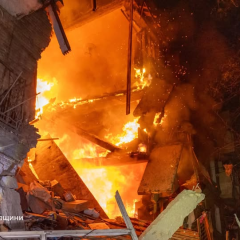
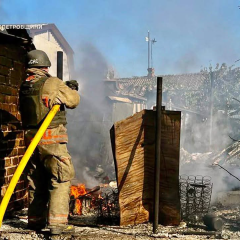
The forty-day military operation did not yield the anticipated outcomes. According to Farajallah, while Iran sustained significant losses-including the destruction of over 1,200 military bases and the sinking of its fleet-the regime itself was not toppled.
“The forty days of war did not produce the result that was expected,” the expert emphasized.
He also noted that the U.S. is 'revising its plans' due to the absence of a concrete strategy:
“The States are buying time because, as it turns out, they have no specific action strategy. That's why their behavior is sometimes chaotic.”
After the Trump administration threatened serious consequences, the Americans altered their approach to military operations, shifting to the precision targeting of logistics. Specifically, five bridges in Iran were destroyed.
“They are revising their plans,” added Farajallah, commenting on the changes in U.S. strategy.
The expert further observed that Iran may prove capable of 'outmaneuvering' its opponents, as 'they always use phrasing that requires careful thought.' Farajallah stressed that Iran possesses 'strategic patience' and is prepared to endure difficult times to ultimately return to its objectives. The situation around the U.S.-Iran conflict remains tense, and the subsequent actions of both sides could significantly influence developments in the region.
This analysis underscores the uncertainty in U.S. strategy toward Iran, which could lead to a further escalation of the conflict. Given that Iran demonstrates resilience and a readiness for a prolonged struggle, it is crucial to monitor shifts in the political landscape, as they may substantially impact regional security and global geopolitical relations.
As the U.S. reassesses its strategy in the wake of the failed campaign, analysts are raising alarms about the broader implications of this conflict. The situation in Iran is further complicated by potential risks associated with nuclear capabilities and intelligence failures, which could escalate tensions in the region. For a deeper understanding of these critical issues, see our detailed analysis on the strategic challenges facing the U.S.

Read also